Ahmad Jamal
·
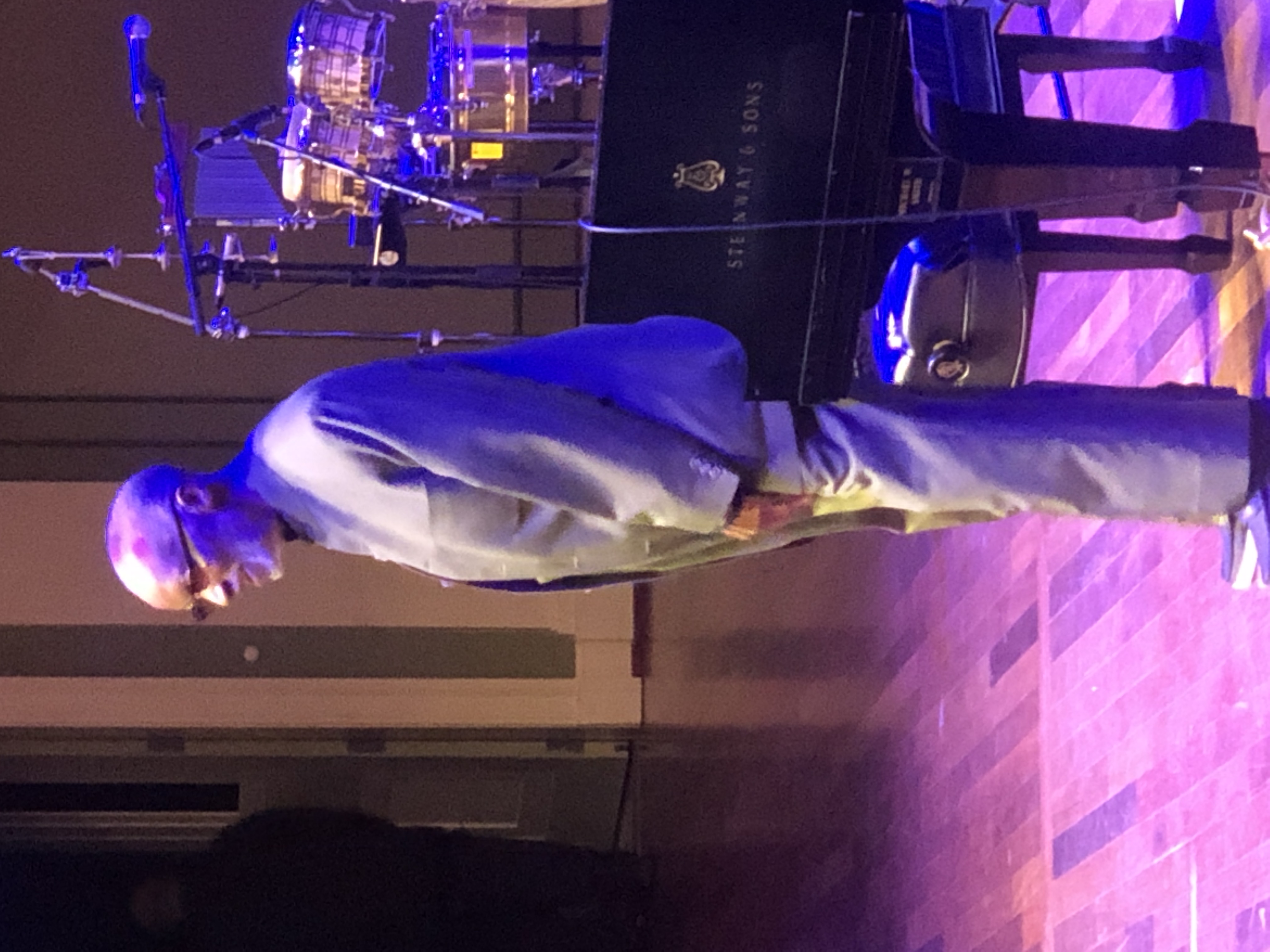
Miles Davis studied Ahmad Jamal so closely that you can hear it in the space he left in his own music. Among the fifty players in jazz journalist Gene Rizzo's ranking of the greatest jazz pianists, Jamal lands at number 16 — an understated master whose use of silence and tightly arranged trios influenced a generation, Davis chief among them. Whatever he owed to earlier players, Rizzo writes, "he is his own man in matters of melody and harmony."
This profile covers who Ahmad Jamal was, how a Pittsburgh prodigy made space itself into a style, why Miles Davis borrowed from him, and the recordings — plus scores — to start with today.
The short answer: Ahmad Jamal (1930–2023) was a Pittsburgh-born pianist and composer whose spare, space-conscious playing and interdependent trio arrangements — heard on the hit At the Pershing — reshaped how jazz pianists think about restraint.
Life and career
Jamal was born Fritz Jones in Pittsburgh in 1930, in a city famous for producing jazz pianists, and adopted a Muslim name in early adulthood after converting to Islam. Classically trained from the age of seven — his teachers included Mary Caldwell Dawson, founder of America's first Black opera company — he was playing Liszt études by eleven. His first major exposure came in Chicago with the Four Strings, which became the Three Strings and then the Ahmad Jamal Trio.
His finest trio paired bassist Israel Crosby and drummer Vernel Fournier in tight, interdependent arrangements. The hit album Ahmad Jamal at the Pershing (Chess, 1958) made his name, and four more albums charted high into the late 1960s. Miles Davis borrowed his vamping two-beat grooves and four-bar tags outright, and even recorded Jamal's "New Rhumba" in a Gil Evans arrangement in 1957. Jamal's playing grew richer from the mid-1970s on; he preferred to call his music "contemporary American music" rather than jazz. He died in 2023 at the age of 92.
Style and influence
Jamal's signature was restraint. He played laconically and left generous space, favoring lower-register recitatives, pedal points and phrases that anticipate the harmony rather than chase it. The early Erroll Garner influence is audible, but Jamal shed the showman's mannerisms — Rizzo puts it sharply, praising him for playing "without the doggie-sweater cuteness of lesser Garnerians." What is left is architecture: every note placed for maximum effect.
That approach made him one of the most quietly influential pianists in the music. Miles Davis absorbed his sense of space, and pianists including Red Garland, Wynton Kelly and Cedar Walton took cues from his touch and his arrangements. Few players have shaped so many others while playing so few notes.
Essential recordings
Jamal's catalog spans six decades, but a few titles are the essential entry points:
| Recording | Label / year | Why it matters |
|---|---|---|
| Ahmad Jamal at the Pershing: But Not for Me | Argo/Chess, 1958 | The breakthrough hit; home to his signature reading of "Poinciana" |
| The Awakening | Impulse!, 1970 | A widely admired later trio date, heavily sampled by hip-hop producers |
| Ahmad Jamal at the Pershing, Vol. 2 | Argo/Chess, 1961 | More of the Crosby-Fournier trio at its interdependent best |
| I Remember Duke, Hoagy and Strayhorn | Telarc, 1995 | The richer, mature Jamal interpreting the American songbook |
Play Ahmad Jamal's music
The lesson of Jamal is that space is a note too. Take his signature "Poinciana," play the melody sparely over a two-beat groove, and resist filling every bar — the silence is where the tension lives. His originals "New Rhumba" and "Ahmad's Blues" show the same economy in his own writing. A few of his signature pieces are open on MuseScore below, in arrangements from approachable to advanced.
Where Ahmad Jamal ranks among jazz pianists
Rizzo places Jamal sixteenth, and few pianists in the fifty influenced more players. See the full list in our guide to the best jazz pianists of all time, and compare him with a pianist who absorbed his sense of space, Red Garland, and with his ranking neighbors Thelonious Monk and Billy Taylor. To understand the harmony he anticipated so cannily, our guide to jazz chord progressions is a good starting point.
Frequently asked questions
What is Ahmad Jamal's most famous song?
His signature performance is "Poinciana," a 1930s pop ballad he transformed with a hypnotic two-beat groove on the 1958 album At the Pershing. He did not write it, but his arrangement became inseparable from his name.
How did Ahmad Jamal influence Miles Davis?
Davis openly admired Jamal's use of space and his tight arrangements, borrowing his vamping two-beat grooves and four-bar tags, and recording Jamal's composition "New Rhumba" in 1957. Jamal's economy helped shape the spare sound of Davis's own groups.
What should I listen to first?
Start with Ahmad Jamal at the Pershing (1958), especially "Poinciana," to hear the space-conscious trio style that made him so influential, then explore The Awakening (1970).
See scores on MuseScore
Rate this article
Be the first to rate this articleSee more

Virtual piano
Play a piano in your browser — use your mouse, touch, or computer keyboard. Real piano sound, and a free Pro tab with up to 61 keys, sustain, MIDI keyboard input, a metronome, and recording.

Keyboard ear trainer
Hear a note, then click the matching key on the on-screen piano — with instant feedback, the right key revealed on a miss, and a running score.

Metronome
Set the tempo and time signature and practice in steady time, or open the Pro tab for subdivisions, per-beat accents, a speed trainer, a gap trainer, click sounds, and recording yourself under the click — all free, right in your browser.

Scale finder
Pick a root note and a scale type — major, minor, the modes, pentatonic, blues — and see every note light up on the piano, spelled out for you.

Chord finder
Pick a root note and a chord type — major, minor, sevenths, suspended and more — and see the chord on the piano, named and spelled out for you.

Note finder
Pick a note and see every place it sits on the piano keyboard, named — and tap any key to hear it.