Thelonious Monk
·
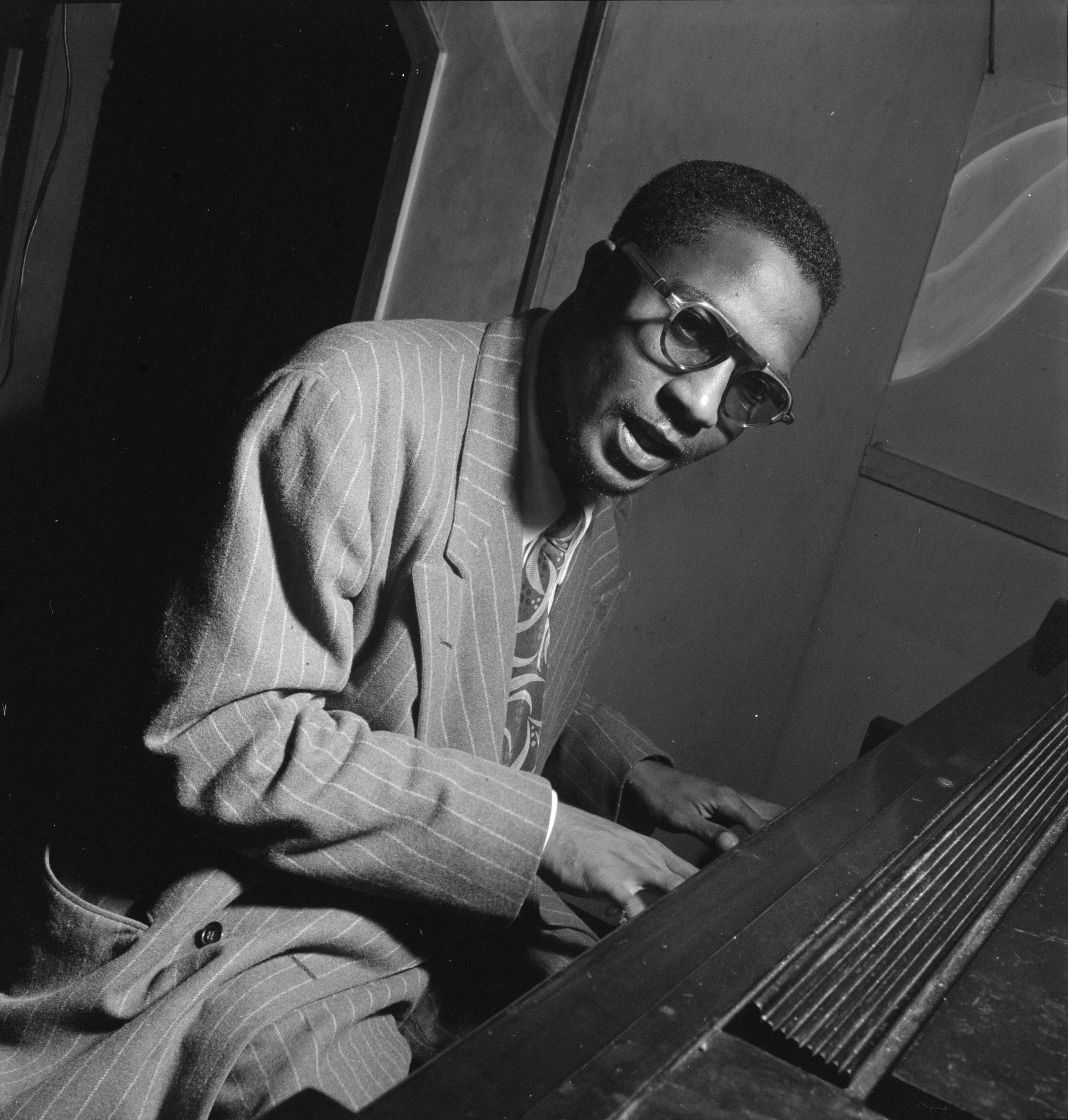
No jazz pianist sounds like Thelonious Monk, and no one ever will — the angular melodies, the crushed dissonances, the silences where you expect a note. Among the fifty players in jazz journalist Gene Rizzo's ranking of the greatest jazz pianists, Monk lands at number 15, a placement that says more about Rizzo's category than about Monk's importance: as a composer he stands with the giants. Rizzo's own summary is disarmingly plain — "it is vital, swinging jazz."
This profile covers who Thelonious Monk was, how a Harlem rent-party pianist helped invent bebop, what makes his music so unmistakable, and the recordings — plus scores — to start with today.
The short answer: Thelonious Monk (1917–1982) was one of jazz's greatest composers and a singular pianist whose angular, dissonant, stride-rooted style and standards like "'Round Midnight" reshaped the music from within.
Life and career
Monk was born in Rocky Mount, North Carolina, in 1917 and raised on San Juan Hill, on Manhattan's Upper West Side. He grew up near the stride legends James P. Johnson and Willie "The Lion" Smith, whose influence surfaces throughout his playing, and he started out as a rent-party pianist and an accompanist for his mother's church singing. By the early 1940s he was the house pianist at Minton's Playhouse in Harlem, where — alongside Charlie Parker and Dizzy Gillespie — bebop took shape.
Wider success eluded him until his late-1950s sides for Riverside; his popularity then peaked on Columbia in the 1960s, during celebrated long runs at the Five Spot. Along the way he cultivated an eccentric public image — a Vandyke beard, bamboo-frame sunglasses, an array of unusual hats, and the notorious machine-gun cover of the album Underground. Rizzo argues that this "lunatic" persona ultimately did his legacy a disservice, distracting from the seriousness of the music. Monk died in 1982.
Style and influence
Monk's technique was unorthodox by design. He laced his lines with stride left hand, welcomed dissonance others would have smoothed away, and built melodies from sharp, angular intervals and deliberate space. It can sound spiky on first listen, but it is, as Rizzo insists, vital and swinging — every odd choice serves the groove and the tune. Rizzo also calls him "the future high priest of bebop," a title the Minton's years earned.
His stylistic heirs are few and unmistakable — Randy Weston, Abdullah Ibrahim and Cecil Taylor among them — none of whom made Rizzo's fifty. His deeper influence, though, is through the songbook: "'Round Midnight," "Epistrophy," "Misterioso" and "Ruby, My Dear" are now foundations of the repertoire.
Essential recordings
Monk's discography rewards patience, but a few titles are the natural way in:
| Recording | Label / year | Why it matters |
|---|---|---|
| Brilliant Corners | Riverside, 1957 | The album that turned the tide of his reputation; complex, uncompromising, essential |
| Thelonious Monk with John Coltrane | Jazzland, 1957 sessions | Documents the fabled Five Spot partnership with Coltrane |
| Solo Monk | Columbia, 1965 | His compositions stripped to one pair of hands, where the stride roots show plainly |
| Underground | Columbia, 1968 | Late-career Monk and the source of that infamous album cover |
Play Thelonious Monk's music
Monk is one of the best composers to learn from, because the tunes teach you to hear differently. Start with the melody of "Blue Monk" — a simple, playable blues — then try "'Round Midnight" and listen for how the dissonances resolve. Do not iron out the "wrong" notes; they are the point. A few of his signature pieces are open on MuseScore below, in arrangements from approachable to advanced.
Where Thelonious Monk ranks among jazz pianists
Rizzo places Monk fifteenth as a pianist, though as a composer he stands apart from any ranking. See the full list in our guide to the best jazz pianists of all time, and compare him with the Harlem stride master who shaped him, Willie "The Lion" Smith, and with his ranking neighbors Hampton Hawes and Ahmad Jamal. To understand the harmony behind his angular writing, our guide to jazz chord progressions is a good starting point.
Frequently asked questions
What songs did Thelonious Monk write?
Monk wrote many jazz standards, including "'Round Midnight" — one of the most recorded of all jazz compositions — along with "Epistrophy," "Blue Monk," "Straight, No Chaser," "Well, You Needn't," "Misterioso" and "Ruby, My Dear."
Why does Thelonious Monk's playing sound so unusual?
Monk deliberately embraced dissonance, angular melodic intervals and pointed silences, all rooted in Harlem stride piano. What can seem like mistakes are intentional choices that give his music its unmistakable, swinging character.
What should I listen to first?
Start with Brilliant Corners (1957) for the band music that revived his reputation, then hear Solo Monk (1965) to enjoy his compositions and stride roots on solo piano.
See scores on MuseScore
Rate this article
Be the first to rate this articleSee more

Virtual piano
Play a piano in your browser — use your mouse, touch, or computer keyboard. Real piano sound, and a free Pro tab with up to 61 keys, sustain, MIDI keyboard input, a metronome, and recording.

Keyboard ear trainer
Hear a note, then click the matching key on the on-screen piano — with instant feedback, the right key revealed on a miss, and a running score.

Metronome
Set the tempo and time signature and practice in steady time, or open the Pro tab for subdivisions, per-beat accents, a speed trainer, a gap trainer, click sounds, and recording yourself under the click — all free, right in your browser.

Scale finder
Pick a root note and a scale type — major, minor, the modes, pentatonic, blues — and see every note light up on the piano, spelled out for you.

Chord finder
Pick a root note and a chord type — major, minor, sevenths, suspended and more — and see the chord on the piano, named and spelled out for you.

Note finder
Pick a note and see every place it sits on the piano keyboard, named — and tap any key to hear it.