Billy Taylor
·
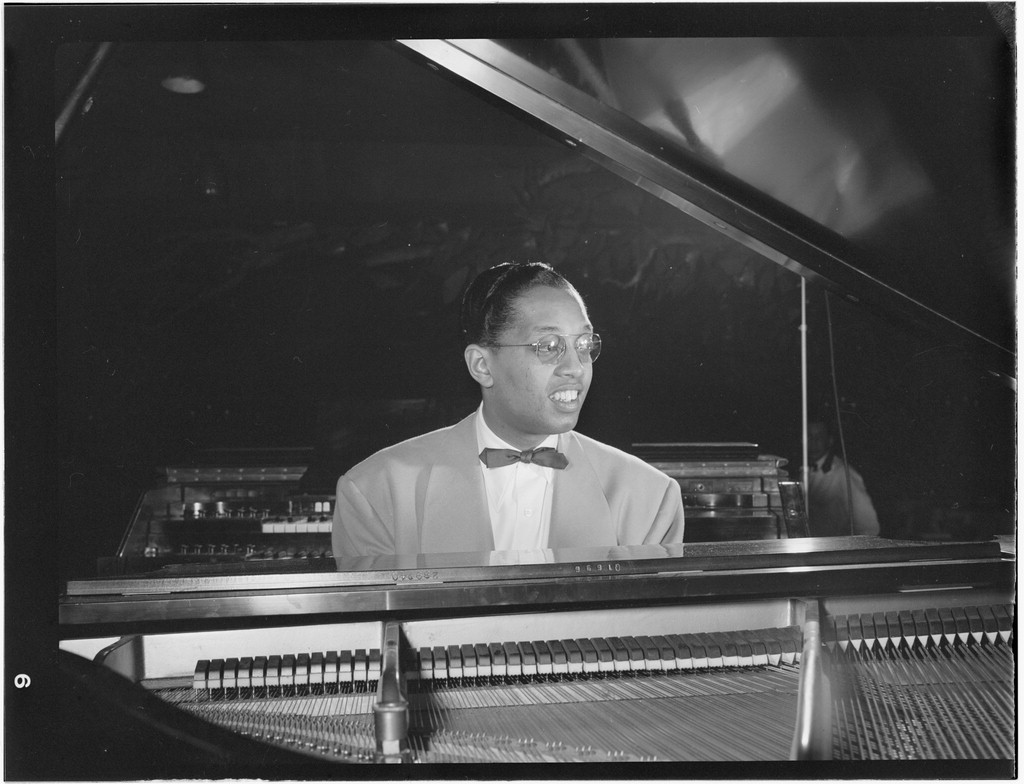
If you grew up hearing jazz explained on the radio or television, there is a good chance Billy Taylor was your teacher without your knowing it. Among the fifty players in jazz journalist Gene Rizzo's ranking of the greatest jazz pianists, Taylor lands at number 17 — a polished, swinging bebop stylist whose even larger legacy is decades of tireless jazz education and advocacy. He was no revolutionary, but in his hands, as Rizzo notes, "the bebop torch burns brightly."
This profile covers who Billy Taylor was, how a Washington-raised pianist became jazz's great public educator, what defined his playing, and the recordings — plus scores — to start with today.
The short answer: Billy Taylor (1921–2010) was an American pianist, composer and educator whose refined, Powell-inflected bebop and lifetime of teaching, broadcasting and advocacy made him one of the music's most important ambassadors.
Life and career
Taylor was born in North Carolina in 1921 and raised in Washington, D.C. His interest in the piano was marginal until he heard records by Fats Waller and Art Tatum; his private studies included Henry Grant, Duke Ellington's only formal teacher, and he earned a bachelor of music from Virginia State College. Arriving in New York, he worked with Ben Webster at the Three Deuces on 52nd Street in 1944, and his early credits soon included Stuff Smith, Billie Holiday and Dizzy Gillespie.
On Teddy Wilson's advice he studied with Richard McClanahan, spent time in Machito's band in 1946, and freelanced in Paris. He led the quartet that became Artie Shaw's last Gramercy Five, served as house pianist at Birdland in 1951, and fronted his own trios from 1952 on. He also earned a PhD in music from the University of Massachusetts in 1975. But his singular contribution was as an educator and advocate: he wrote for Down Beat and Esquire, co-founded Jazzmobile in 1965, published the Jazz Piano book in 1982, served as arts correspondent on CBS Sunday Morning, and was artistic advisor for jazz at the Kennedy Center. He died in 2010.
Style and influence
As a pianist, Taylor played polished bebop filtered through Bud Powell: solid swing, a genuine jazz ear for harmony, and unashamed borrowings from Ravel. Rizzo is candid that he was "neither an innovator nor strikingly original," yet quick to add that the playing is expert, tasteful and — importantly — "never self-consciously Euro-centric," swinging first and drawing on the classics second.
His foundations were Fats Waller, Art Tatum, Bud Powell and Teddy Wilson. His influence, though, is measured less in imitators than in audiences: through radio, television and print he taught more people what jazz was, and how it worked, than almost any player of his generation.
Essential recordings
Taylor's catalog is deep; these titles capture the pianist and the composer:
| Recording | Label / year | Why it matters |
|---|---|---|
| The Billy Taylor Trio with Candido | Prestige, 1954 | Classic 1950s trio bebop, with congas adding a Latin lift |
| Billy Taylor with Four Flutes | Riverside, 1959 | Shows his arranging ear and his taste for unusual textures |
| Music Keeps Us Young | Arkadia, 1997 | Late-career trio playing that confirms the swing never faded |
| Ten Fingers, One Voice | Arkadia, 1999 | A solo album that lays his harmonic thinking bare |
Play Billy Taylor's music
Taylor left one composition every pianist should know: "I Wish I Knew How It Would Feel to Be Free," a civil-rights-era anthem later made famous by Nina Simone. Learn its melody and simple, hopeful harmony first, then explore his more intricate originals. A few of his signature pieces are open on MuseScore below, in arrangements from approachable to advanced.
Where Billy Taylor ranks among jazz pianists
Rizzo places Taylor seventeenth, valuing the craftsmanship over any claim to innovation. See the full list in our guide to the best jazz pianists of all time, and compare him with the virtuoso who first drew him to the piano, Art Tatum, and with his ranking neighbors Ahmad Jamal and Horace Silver. To understand the harmony he taught so well, our guide to jazz chord progressions is a good starting point.
Frequently asked questions
What is Billy Taylor's most famous composition?
"I Wish I Knew How It Would Feel to Be Free," written in 1952, is his best-known tune. It became an anthem of the civil rights movement and was famously recorded by Nina Simone.
Why is Billy Taylor important beyond his playing?
Taylor was one of jazz's great educators and advocates. He co-founded Jazzmobile, wrote an influential Jazz Piano book, earned a doctorate in music, and reached wide audiences through radio and television, including CBS Sunday Morning.
What should I listen to first?
Start with a 1950s trio date such as The Billy Taylor Trio with Candido (1954) for his classic bebop, then hear the solo album Ten Fingers, One Voice (1999) for his mature harmonic style.
See scores on MuseScore
Rate this article
Be the first to rate this articleSee more

Virtual piano
Play a piano in your browser — use your mouse, touch, or computer keyboard. Real piano sound, and a free Pro tab with up to 61 keys, sustain, MIDI keyboard input, a metronome, and recording.

Keyboard ear trainer
Hear a note, then click the matching key on the on-screen piano — with instant feedback, the right key revealed on a miss, and a running score.

Metronome
Set the tempo and time signature and practice in steady time, or open the Pro tab for subdivisions, per-beat accents, a speed trainer, a gap trainer, click sounds, and recording yourself under the click — all free, right in your browser.

Scale finder
Pick a root note and a scale type — major, minor, the modes, pentatonic, blues — and see every note light up on the piano, spelled out for you.

Chord finder
Pick a root note and a chord type — major, minor, sevenths, suspended and more — and see the chord on the piano, named and spelled out for you.

Note finder
Pick a note and see every place it sits on the piano keyboard, named — and tap any key to hear it.