Art Tatum
·
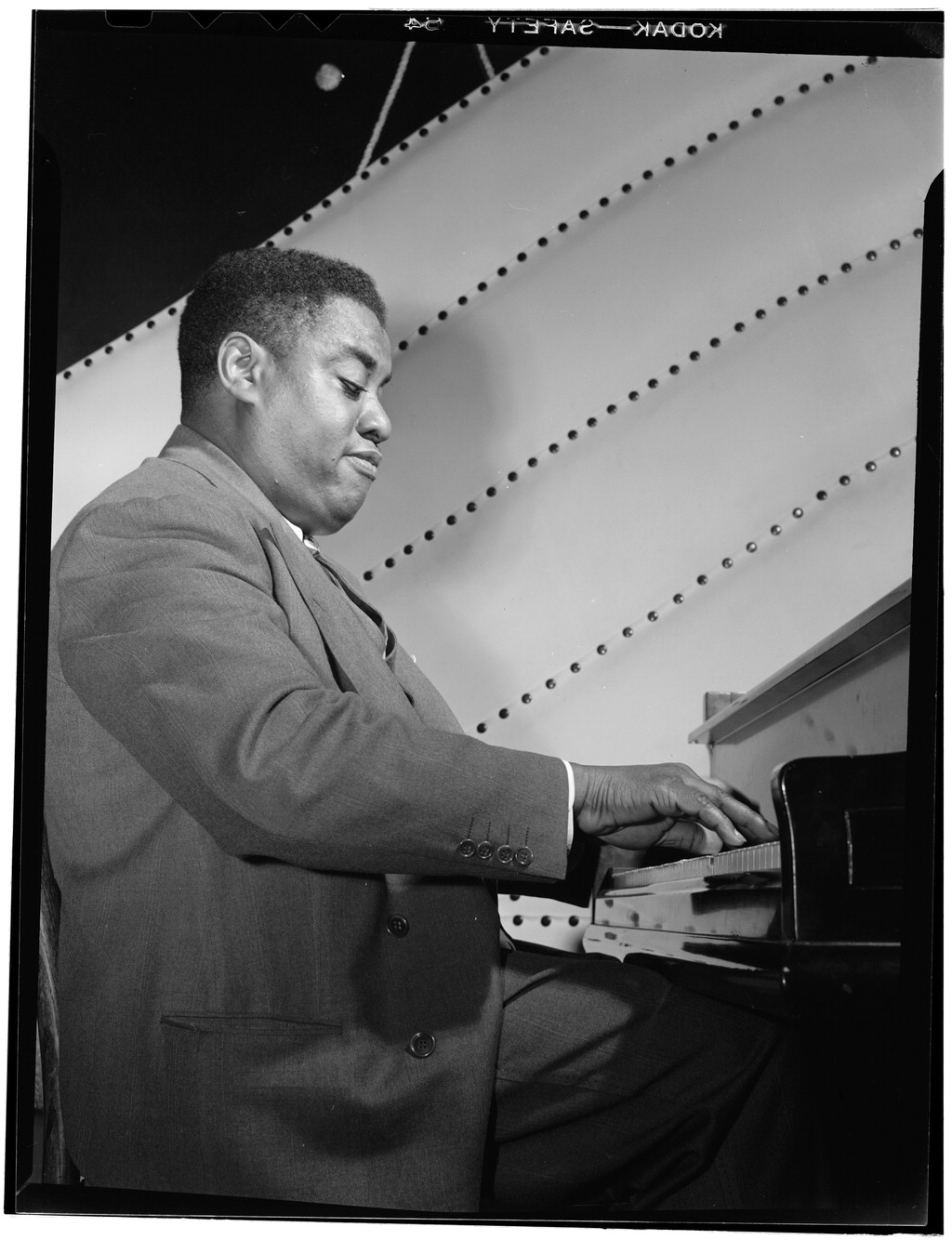
Among the fifty players in jazz journalist Gene Rizzo's ranking of the greatest jazz pianists, few cast a longer shadow than Art Tatum, who lands at number 4. Rizzo opens the entry with a line other pianists would recognize instantly — Tatum, he writes, "scared the bejesus out of piano players." The virtuosity really was that complete: when the young Oscar Peterson first heard Tatum, the story goes, he did not touch the piano for weeks.
This profile covers who Art Tatum was, how a nearly blind kid from Ohio became the most feared technician in jazz, what made his playing so singular, and the recordings — plus scores — to start with today.
The short answer: Art Tatum (1909–1956) was an almost totally blind pianist from Toledo, Ohio, whose blinding speed, orchestral textures and harmonic reach expanded the idea of what one person could do at the keyboard, and who influenced nearly every pianist who came after him.
Life and career
Tatum was born in Toledo in 1909, nearly blind from birth. He learned to read music in Braille at the Toledo School of Music under the teacher Overton G. Rainey, and had a regular radio slot on the local station WSPD by the time he was eighteen. In 1932 he went to New York as the singer Adelaide Hall's accompanist, and quickly became a legend in Harlem's after-hours "cutting contests," where pianists dueled for supremacy. Fats Waller once introduced him to a room with the line, "God is in the house."
He formed a piano-bass-guitar trio in 1943 with guitarist Tiny Grimes and bassist Slam Stewart, but solo playing was always his real medium — a band could only slow him down. In his final years the producer Norman Granz captured him at length, both alone and in small groups, sessions that remain the core of his legacy. Tatum died of uremia in 1956, at just 47.
Style and influence
What set Tatum apart was the sheer density of what he played. Where other pianists picked a melody line, Tatum reharmonized it on the fly, threaded runs between the beats, and moved through keys with a freedom that seemed to break the rules of the instrument. He turned a simple pop tune into a towering structure without ever tipping into empty display.
The influence ran everywhere. Rizzo notes that Teddy Wilson, Bud Powell and Oscar Peterson all drew directly on him — Peterson became a kind of protégé — and even the bebop saxophonist Charlie Parker cited Tatum's harmonic thinking. Rizzo's verdict is characteristically blunt: if Tatum was not a genius, he was "within striking distance" of one.
Essential recordings
Tatum's studio legacy centers on the late Norman Granz sessions, but his 1930s sides are where the flagship performances live:
| Recording | Label / year | Why it matters |
|---|---|---|
| "Tea for Two" | 1933 | His signature showpiece — the recording that announced a new level of solo virtuosity |
| "Tiger Rag" | 1933 | Breakneck tempo and cascading two-handed runs that astonished every pianist who heard it |
| The Complete Pablo Solo Masterpieces | Pablo, 1953–55 | The definitive late solo series produced by Norman Granz; a seven-disc masterclass |
| Tatum Group Masterpieces Vol. 8 | Pablo, 1956 | A brilliant, poignant farewell with tenor saxophonist Ben Webster, cut weeks before his death |
Play Art Tatum's music
The fastest way to understand Tatum is to play the tunes he transformed. Start with the melodies of "Tea for Two" or "Over the Rainbow" in a simple arrangement, then listen to what he did with the same material — the gap between the two is the lesson. A few of his signature vehicles are open on MuseScore below, in arrangements from approachable to advanced.
Where Art Tatum ranks among jazz pianists
Rizzo places Tatum fourth, behind Oscar Peterson, Bill Evans and Bud Powell — though many musicians, Peterson included, would put him first. See the full list in our guide to the best jazz pianists of all time, and compare Tatum with the pupils he shaped, Oscar Peterson and Bud Powell. To hear how his harmonic thinking works, our guide to jazz chord progressions is a good starting point.
Frequently asked questions
Was Art Tatum blind?
Almost. Tatum was born nearly blind in 1909 and had very limited vision throughout his life. He learned music partly in Braille and by ear, which makes the precision and speed of his playing all the more remarkable.
Why is Art Tatum considered so great?
Tatum combined a virtually flawless technique with adventurous reharmonization and a full, orchestral texture — effectively rethinking how much one pianist could play at once. Musicians from Teddy Wilson to Charlie Parker studied him, and Oscar Peterson called him the greatest jazz instrumentalist of all.
What should I listen to first?
Start with his 1933 "Tea for Two" for the classic showpiece, then explore The Complete Pablo Solo Masterpieces (1953–55) for the mature solo playing. Both show the qualities that put him near the top of every serious ranking.
See scores on MuseScore
Rate this article
Be the first to rate this articleSee more

Virtual piano
Play a piano in your browser — use your mouse, touch, or computer keyboard. Real piano sound, and a free Pro tab with up to 61 keys, sustain, MIDI keyboard input, a metronome, and recording.

Keyboard ear trainer
Hear a note, then click the matching key on the on-screen piano — with instant feedback, the right key revealed on a miss, and a running score.

Metronome
Set the tempo and time signature and practice in steady time, or open the Pro tab for subdivisions, per-beat accents, a speed trainer, a gap trainer, click sounds, and recording yourself under the click — all free, right in your browser.

Scale finder
Pick a root note and a scale type — major, minor, the modes, pentatonic, blues — and see every note light up on the piano, spelled out for you.

Chord finder
Pick a root note and a chord type — major, minor, sevenths, suspended and more — and see the chord on the piano, named and spelled out for you.

Note finder
Pick a note and see every place it sits on the piano keyboard, named — and tap any key to hear it.