Bud Powell
·
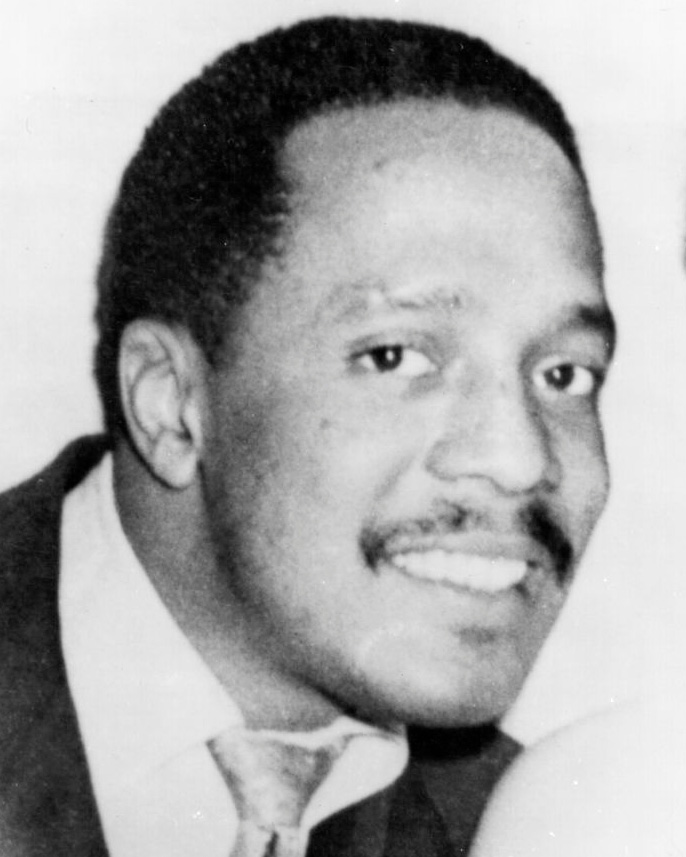
Bebop needed a piano voice to match the speed and daring of Charlie Parker's saxophone, and Bud Powell invented it. In jazz journalist Gene Rizzo's ranking of the fifty greatest jazz piano players, Powell places third, and nearly every modern jazz pianist plays some version of the language he built — spare left hand, lightning right, phrasing borrowed from horns rather than from the keyboard's own past.
This profile covers who Bud Powell was, how he translated bebop to the piano, what made his style revolutionary, and the recordings — plus scores — to start with today.
The short answer: Bud Powell (1924–1966) was an American pianist from New York City who created the vocabulary of bebop piano — trading stride's full left hand for lean, upbeat voicings and horn-like single-note lines — and whose influence became the template for decades of players.
Life and career
Powell was born in New York City in 1924, the son of an amateur stride pianist, and was classically trained from the age of five. As a teenager he took part in the early-1940s experimental jam sessions at Minton's Playhouse alongside Thelonious Monk, Charlie Parker and Dizzy Gillespie, where the new music was being worked out night after night.
He worked as a sideman with trumpeter Fats Navarro and saxophonists Sonny Stitt and J.J. Johnson before emerging as bebop's defining pianist. His adult life was turbulent — a police beating, hospitalizations, and struggles with alcohol and mental illness repeatedly interrupted his career — and he lived in Paris from 1959 to 1964 before returning to New York, where he died in 1966. Through it all he left a body of composition and recording that shaped the music permanently.
Style and influence
Powell stripped the piano down. Where stride pianists pumped a full, striding left hand, he played spare, off-beat chord stabs and let his right hand fly in long, angular lines that owed more to Parker's alto than to any keyboard tradition. Rizzo captures it perfectly: Powell, he writes, "did not play piano so much as he blew it."
He learned from Art Tatum and Teddy Wilson and idolized Parker, but his conception was new, and it spread everywhere. As the pianist Ray Bryant observed, Powell influenced everyone who came after him — from Tommy Flanagan's serpentine lines to the young Bill Evans, whom Powell personally encouraged. His compositions, once thought forbiddingly difficult, are now standards.
Essential recordings
| Recording | Label / year | Why it matters |
|---|---|---|
| The Amazing Bud Powell, Vol. 1 | Blue Note, 1949–51 | Core sessions with "Un Poco Loco" and "Dance of the Infidels" |
| The Complete Blue Note and Roost Recordings | Blue Note, 1947–63 | Four-disc set gathering his most influential studio work |
| The Genius of Bud Powell | Verve, 1950–51 | Solo and trio sides that show the full range of his composing and playing |
| Jazz Giant | Verve, 1949–50 | A prime overview of the trio work that set the bebop-piano standard |
Play Bud Powell's music
Powell was a composer as much as a player, and his originals are the best way to learn his language. Start with the driving "Un Poco Loco," then the bright "Dance of the Infidels," and the through-composed "Glass Enclosure," one of jazz's most unusual short pieces. A few of his signature compositions are open on MuseScore below, in arrangements from approachable to advanced.
Where Bud Powell ranks among jazz pianists
Rizzo places Powell third, behind Oscar Peterson and Bill Evans and just ahead of his own idol Art Tatum — a nod to how completely he reshaped the instrument. See the full list in our guide to the best jazz pianists of all time. To get inside the harmony of bebop, start with our guide to jazz chord progressions.
Frequently asked questions
Why is Bud Powell important?
He created the template for bebop piano — a lean left hand and fast, horn-like right-hand lines — that virtually every modern jazz pianist has drawn on since. His compositions, such as "Un Poco Loco," are now standards.
Did Bud Powell influence Bill Evans?
Yes. Powell championed and encouraged the young Bill Evans, and his harmonic and rhythmic ideas fed directly into the next generation, including Evans and Tommy Flanagan.
What should I listen to first?
Start with The Amazing Bud Powell, Vol. 1 for "Un Poco Loco" and "Dance of the Infidels," then explore The Complete Blue Note and Roost Recordings for the wider picture.
See scores on MuseScore
Rate this article
Be the first to rate this articleSee more

Virtual piano
Play a piano in your browser — use your mouse, touch, or computer keyboard. Real piano sound, and a free Pro tab with up to 61 keys, sustain, MIDI keyboard input, a metronome, and recording.

Keyboard ear trainer
Hear a note, then click the matching key on the on-screen piano — with instant feedback, the right key revealed on a miss, and a running score.

Metronome
Set the tempo and time signature and practice in steady time, or open the Pro tab for subdivisions, per-beat accents, a speed trainer, a gap trainer, click sounds, and recording yourself under the click — all free, right in your browser.

Scale finder
Pick a root note and a scale type — major, minor, the modes, pentatonic, blues — and see every note light up on the piano, spelled out for you.

Chord finder
Pick a root note and a chord type — major, minor, sevenths, suspended and more — and see the chord on the piano, named and spelled out for you.

Note finder
Pick a note and see every place it sits on the piano keyboard, named — and tap any key to hear it.