Fats Waller
·
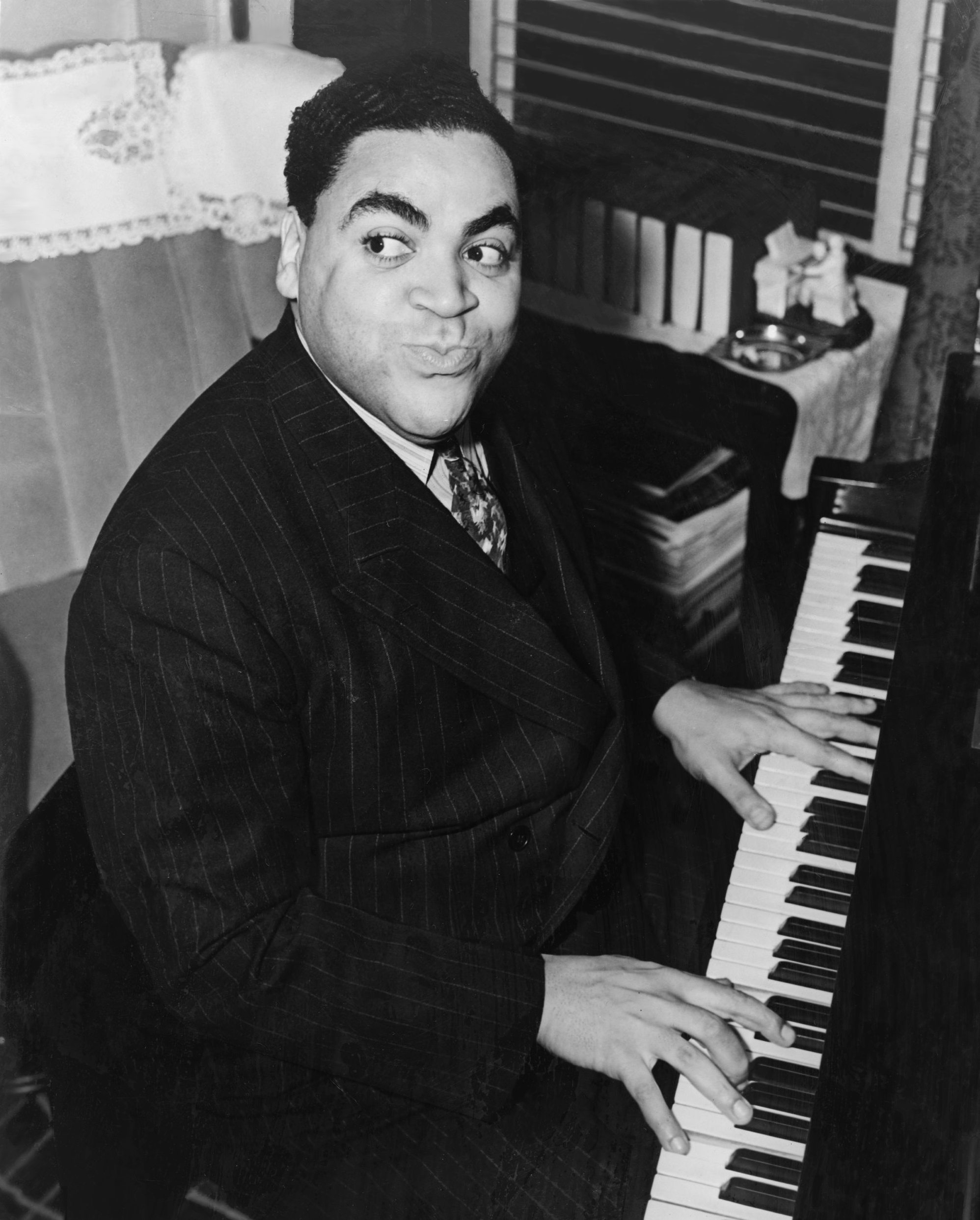
Most people meet Fats Waller as the grinning showman who mugged through "Your Feet's Too Big" and tossed off comic asides between choruses. But strip away the vaudeville and you find one of the most powerful stride pianists who ever lived — a technician good enough that Art Tatum, Count Basie, and Erroll Garner all learned from him. Among the fifty players in jazz journalist Gene Rizzo's ranking of the greatest jazz pianists, Waller lands at number 31, singled out for making "some of the happiest music in the history of jazz."
This profile covers who Fats Waller was, how a Harlem organist became a stride master and hit songwriter, why his piano deserves attention beyond the comedy, and the recordings — plus scores — to start with today.
The short answer: Fats Waller (1904–1943) was an American pianist, organist, singer, and composer from Harlem whose thunderous, swinging stride technique and gift for melody made him second only to Louis Armstrong in popularity — and a foundational influence on the pianists who followed.
Life and career
Thomas "Fats" Waller was born in New York in 1904 and took early lessons in Harlem before being coached, in his mid-teens, by the founding stride pianist James P. Johnson. He cut his teeth in cutting contests and the marathon rent parties of the 1920s, sessions that could run ten or twelve hours and forged an unshakable left hand.
He was also the first great jazz organist, and his first important solo piano recordings for RCA Victor in 1929 confirmed his standing in stride. Through the 1930s the "Fats Waller and His Rhythm" records made him a star — but their comic asides increasingly shifted the spotlight from the keyboard to the entertainer, reducing much of his piano to novelty. He wrote for Broadway, appeared in films such as Stormy Weather, and toured relentlessly; heavy drinking and eating cut his life short, and he died of pneumonia on a train in 1943, at just 39.
Style and influence
Waller took the stride style — a striding left hand leaping between bass notes and mid-register chords while the right hand spins the melody — and played it with more swing, power, and precision than almost anyone. Rizzo credits him with "weapons-grade technique," and rates him past both Willie "The Lion" Smith and even his teacher Johnson in the one-man-band idiom.
The influence radiated outward. Rizzo lists Art Tatum, Erroll Garner, Mary Lou Williams, and especially Count Basie among the "Waller-ites" who studied his approach. And Waller was a prolific composer: "Ain't Misbehavin'" and "Honeysuckle Rose" became jazz standards, while showpieces like "Handful of Keys" remain a rite of passage for any pianist serious about stride.
Essential recordings
The comedy records are fun, but the piano lives in the solo sides and the sharper small-group tracks:
| Recording | Label / year | Why it matters |
|---|---|---|
| "Handful of Keys" | RCA Victor, 1929 | A dazzling solo stride showpiece — the clearest proof of his technique, minus the comedy |
| "Ain't Misbehavin'" | RCA Victor, 1929 | His most famous song, in his own hands; melody, swing, and warmth in one performance |
| The Very Best of Fats Waller | RCA / compilation | Gathers the "Fats Waller and His Rhythm" highlights for a one-stop overview of the hits |
| London Suite | recorded in England, 1939 | An ambitious, rarely heard set of solo piano pieces that shows his serious compositional side |
Play Fats Waller's music
Waller wrote hits you already know, which makes him one of the most rewarding pianists to actually play. Begin with the melody of "Ain't Misbehavin'" or "Honeysuckle Rose," then take on the stride workout "Handful of Keys" when your left hand is ready. A few of his signature pieces are open on MuseScore below, from lead sheets to full stride transcriptions.
Where Fats Waller ranks among jazz pianists
Rizzo places Waller at 31, a ranking that honors the pianist behind the entertainer. See the full list in our guide to the best jazz pianists of all time, and compare Waller with his teacher James P. Johnson and two of his most famous pupils, Art Tatum and Count Basie. To understand the harmony under his tunes, start with our guide to jazz chord progressions.
Frequently asked questions
Was Fats Waller a serious pianist or just an entertainer?
Both, but the piano came first. Beneath the comedy was a stride master with formidable technique whom Art Tatum, Count Basie, and Erroll Garner all studied. Rizzo ranks him among the fifty greatest jazz pianists for the playing, not the jokes.
What songs did Fats Waller write?
His best-known compositions include "Ain't Misbehavin'," "Honeysuckle Rose," and "Jitterbug Waltz," along with the solo stride showpiece "Handful of Keys." Several became enduring jazz standards.
What should I listen to first?
Start with the 1929 solo recording of "Handful of Keys" to hear his technique unadorned, then "Ain't Misbehavin'" for the songwriting. Together they show why so many later pianists called themselves "Waller-ites."
See scores on MuseScore
Rate this article
Be the first to rate this articleSee more

Virtual piano
Play a piano in your browser — use your mouse, touch, or computer keyboard. Real piano sound, and a free Pro tab with up to 61 keys, sustain, MIDI keyboard input, a metronome, and recording.

Keyboard ear trainer
Hear a note, then click the matching key on the on-screen piano — with instant feedback, the right key revealed on a miss, and a running score.

Metronome
Set the tempo and time signature and practice in steady time, or open the Pro tab for subdivisions, per-beat accents, a speed trainer, a gap trainer, click sounds, and recording yourself under the click — all free, right in your browser.

Scale finder
Pick a root note and a scale type — major, minor, the modes, pentatonic, blues — and see every note light up on the piano, spelled out for you.

Chord finder
Pick a root note and a chord type — major, minor, sevenths, suspended and more — and see the chord on the piano, named and spelled out for you.

Note finder
Pick a note and see every place it sits on the piano keyboard, named — and tap any key to hear it.