Duke Ellington
·
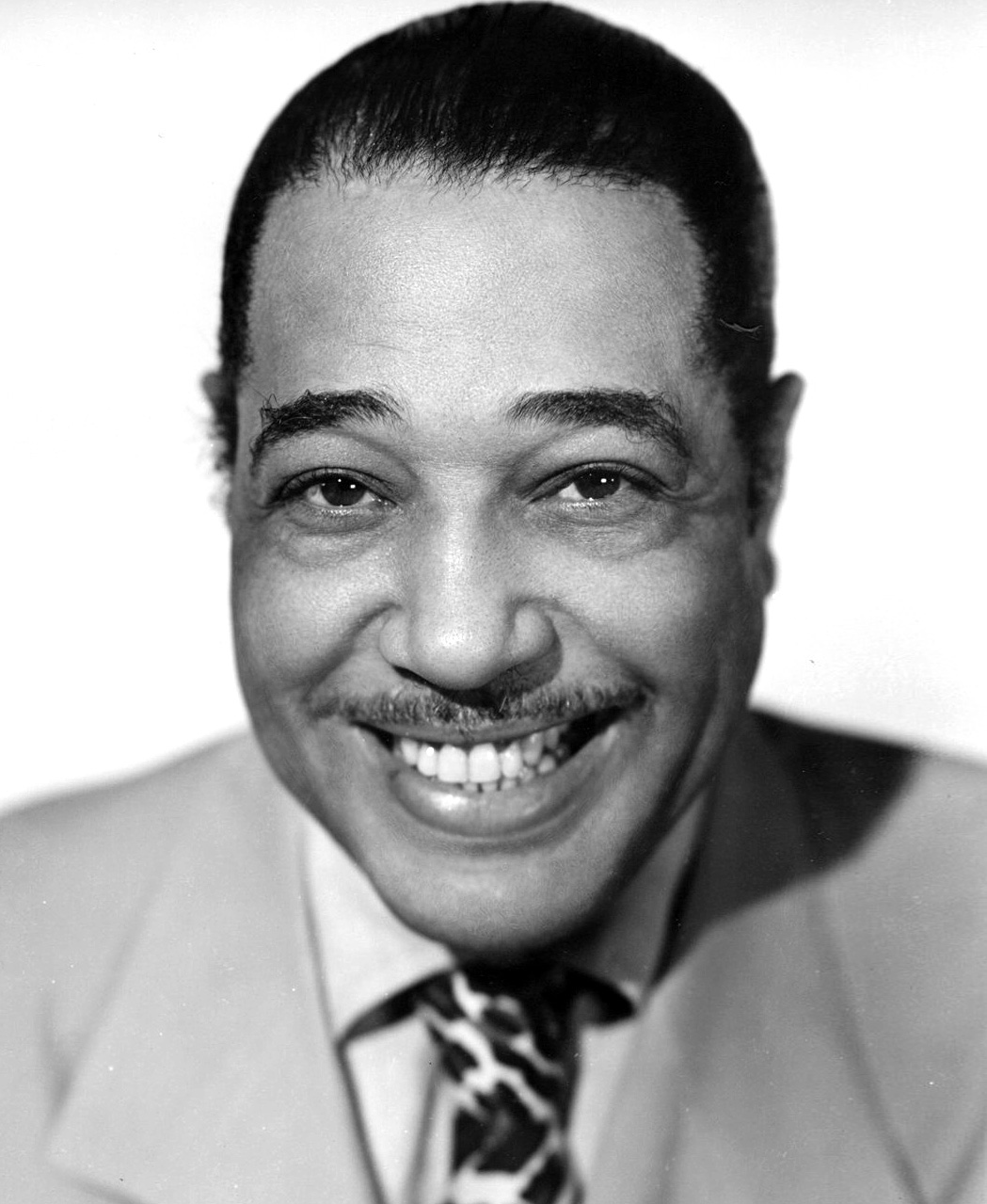
The world remembers Duke Ellington as the towering composer and bandleader of American music — but ask the pianists, and a different figure appears. In jazz journalist Gene Rizzo's ranking of the greatest jazz pianists, Ellington lands at number 38 not for "Take the A Train" or "Mood Indigo" as orchestral works, but for what his own two hands did at the keyboard. And there, Rizzo argues, Ellington was something rarer than a great writer: an utterly original player, "virtually sui generis," whose style resembles no one else's before or since.
This profile covers Duke Ellington specifically as a pianist — how his keyboard voice took shape, what made it unmistakable, and the recordings and scores where you can actually hear him play.
The short answer: Duke Ellington (1899–1974) was, apart from his monumental composing, a highly individual jazz pianist whose percussive touch, dissonant chord clusters and playful sense of rhythm made him a quiet but real influence on Thelonious Monk and the modernists who followed.
Life and career
Edward Kennedy Ellington was born in Washington, D.C., in 1899 into a proud black middle-class family. His early piano lessons were brief; he learned far more by ear, absorbing ragtime as a teenager and picking up harmony tips from Henry Grant, who led his high-school band. He set out for New York in 1923 and made his name later that decade leading an expanded orchestra at Harlem's Cotton Club from 1927.
Once he discovered that composing was his true calling, Ellington deliberately pushed the piano into a supporting role, so only small doses of his solo playing survive across an enormous recorded legacy. Yet he never stopped being a pianist. In 1962 — long after critics had buried both swing and bebop — he cut the fierce trio date Money Jungle with Charles Mingus and Max Roach, and a quartet session with John Coltrane, proving he could hold the cutting edge into his sixties. He remained creative until his death in 1974.
Style and influence
Ellington's piano is instantly recognizable. There are traces of Harlem stride in it — "Willie Smithisms," picked up from his friendship with Willie "The Lion" Smith — but he reshaped them into something spare, angular and unpredictable. He loved rhythmic displacement, dropping a phrase a half-beat off where you expect it, and he punctuated ballads with dissonant chord clusters that a more conventional pianist would never risk.
The effect is a "playful gravitas," as Rizzo describes it, where the serious and the absurd meet in the same gesture. That sensibility — the odd interval, the sly hesitation, the harmonic left turn — points straight ahead to Thelonious Monk, and echoes in players like Randy Weston and Cecil Taylor. Ellington the pianist was, in other words, ahead of his time precisely because he kept it as a sideline.
Essential recordings
| Recording | Label / year | Why it matters |
|---|---|---|
| Money Jungle (with Mingus & Roach) | United Artists, 1962 | The essential Ellington-as-pianist document — a raw, combative trio date that puts his keyboard front and center |
| Duke Ellington & John Coltrane | Impulse!, 1962 | Ellington's spare, patient comping behind a young modernist — a masterclass in saying less |
| Piano in the Foreground | Columbia, 1963 | A rare small-group set that does what the title promises: Ellington's own playing in the spotlight |
Play Duke Ellington's music
Ellington wrote the songbook he played from, so his own compositions are the way in. Start with the melody of "In a Sentimental Mood" — the tune he reimagined so beautifully with Coltrane — then explore the darker "Money Jungle" and the classic "Solitude." All three are open on MuseScore below, in arrangements from approachable to advanced.
Where Duke Ellington ranks among jazz pianists
Rizzo places Ellington at number 38, judging the pianist apart from the composer. See the full list in our guide to the best jazz pianists of all time, and compare Ellington with the stride mentor who shaped his touch, Willie "The Lion" Smith, the modernist he pointed toward, Thelonious Monk, and fellow early giant Earl Hines. To hear how his adventurous voicings work, our guide to jazz chord progressions is a good starting point.
Frequently asked questions
Was Duke Ellington a good pianist?
Yes — a highly original one. He kept the piano as a sideline to concentrate on composing, but the playing that survives shows an unmistakable, forward-looking style built on percussive touch, dissonant clusters and rhythmic surprise.
Which pianists did Duke Ellington influence?
His angular, harmonically adventurous approach clearly fed into Thelonious Monk, and its echoes reach players such as Randy Weston and Cecil Taylor. He himself absorbed Harlem stride from Willie "The Lion" Smith.
Where can I actually hear Ellington play piano?
Start with the 1962 trio album Money Jungle, then the same year's collaboration with John Coltrane. Both foreground his keyboard work rather than the orchestra he is usually remembered for.
See scores on MuseScore
Rate this article
Be one of the first to rate this articleSee more

Virtual piano
Play a piano in your browser — use your mouse, touch, or computer keyboard. Real piano sound, and a free Pro tab with up to 61 keys, sustain, MIDI keyboard input, a metronome, and recording.

Keyboard ear trainer
Hear a note, then click the matching key on the on-screen piano — with instant feedback, the right key revealed on a miss, and a running score.

Metronome
Set the tempo and time signature and practice in steady time, or open the Pro tab for subdivisions, per-beat accents, a speed trainer, a gap trainer, click sounds, and recording yourself under the click — all free, right in your browser.

Scale finder
Pick a root note and a scale type — major, minor, the modes, pentatonic, blues — and see every note light up on the piano, spelled out for you.

Chord finder
Pick a root note and a chord type — major, minor, sevenths, suspended and more — and see the chord on the piano, named and spelled out for you.

Note finder
Pick a note and see every place it sits on the piano keyboard, named — and tap any key to hear it.