Earl Hines
·
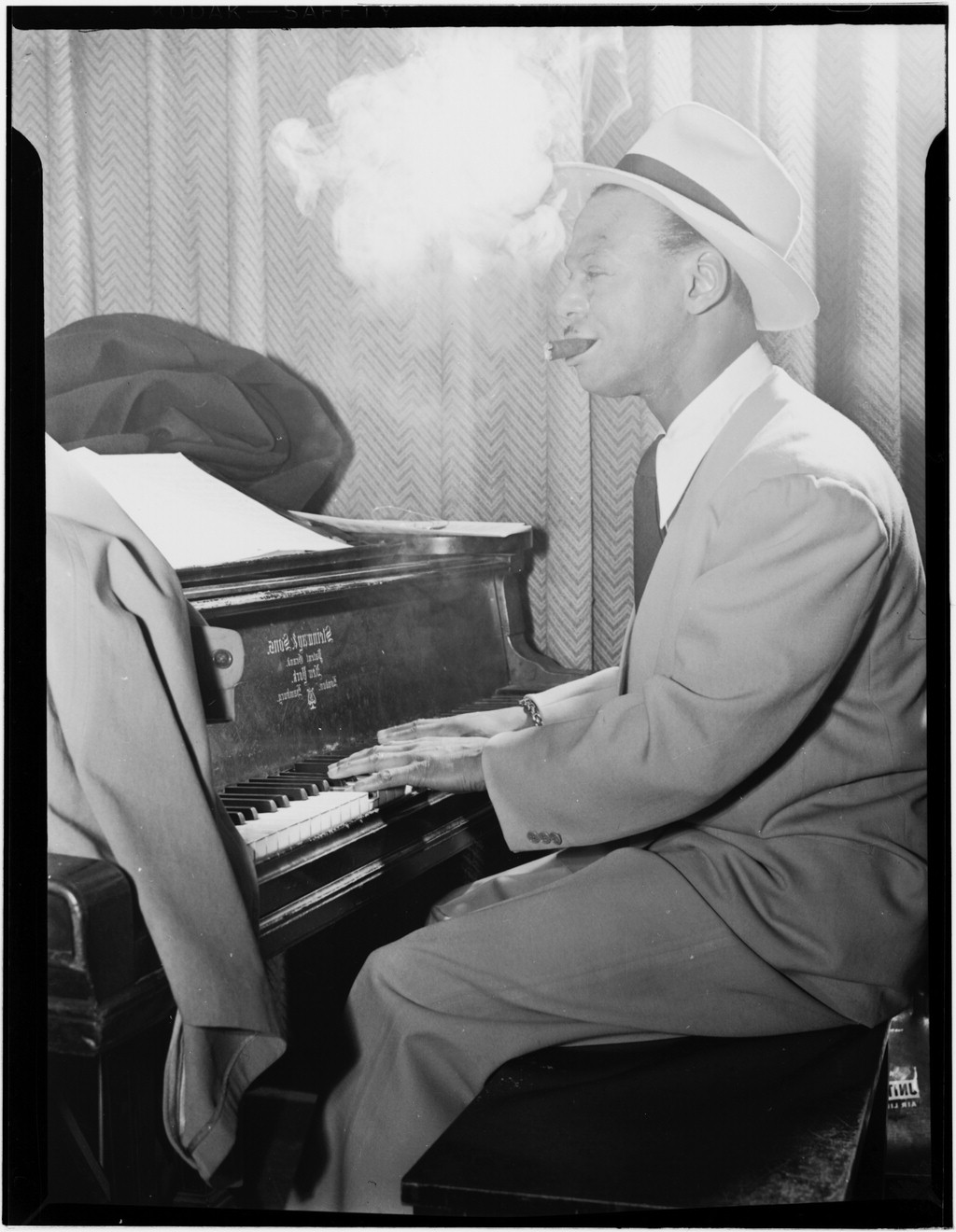
Almost every modern jazz pianist owes a debt to Earl "Fatha" Hines, whether they know it or not. He ranks 39th in jazz journalist Gene Rizzo's list of the greatest jazz pianists, but that number understates his place in history: Rizzo credits Hines with recordings that "raised the curtain on the jazz piano styles of the future." Before Hines, the piano spoke the language of ragtime and stride. After him, it could sing like a horn — and the instrument was never the same.
This profile covers who Earl Hines was, how his "trumpet-style" playing rewrote the rules, whom he influenced, and the recordings and scores to start with today.
The short answer: Earl Hines (1903–1983) was an American pianist and bandleader whose late-1920s work with Louis Armstrong introduced a bold, single-note "trumpet-style" right hand that made ragtime obsolete and shaped nearly every jazz pianist who followed.
Life and career
Hines was born near Pittsburgh in 1903 to musician parents, taught first by his mother and then by classical tutors, and was touring by 1923. His breakthrough came in 1928 in Chicago, when he recorded the seminal Hot Five and Hot Seven sides with Louis Armstrong and stood as Armstrong's only true equal — nowhere more thrillingly than on their duet "Weather Bird."
That same year he began leading a first-rate big band at Chicago's Grand Terrace, a post he held until 1940. He was also a gifted talent scout: his band's alumni include Charlie Parker, Dizzy Gillespie, Billy Eckstine and Sarah Vaughan. After a stint with Armstrong's All-Stars (1948–51) he faded into obscurity, only to be triumphantly rediscovered through three acclaimed 1964 concerts in New York. He kept recording and performing — despite arthritis and heart trouble — until his death in 1983.
Style and influence
Hines's innovation was to free the right hand from ragtime's steady figuration and make it play like a trumpet: crisp octaves in the upper register, sassy knotted runs, and a habit of suspending the beat with sudden tremolos, as if a horn were bending a note. Underneath, his left hand grew unpredictable, abandoning the metronomic oom-pah of stride for something looser and more dangerous.
The influence ran everywhere downstream. Rizzo calls him the "progenitor of such descendants as Art Tatum," and the line continues through Teddy Wilson, Nat "King" Cole, Mary Lou Williams and Erroll Garner into the bebop era. Hines also wrote the standard "Rosetta," a reminder that his gifts extended well beyond the keyboard technique that made him famous.
Essential recordings
| Recording | Label / year | Why it matters |
|---|---|---|
| "Weather Bird" (with Louis Armstrong) | OKeh, 1928 | The famous trumpet-and-piano duet — two equals inventing the future of jazz in real time |
| Hot Five / Hot Seven sessions | OKeh, 1928 | The recordings that announced the "trumpet-style" piano and made ragtime sound old overnight |
| Spontaneous Explorations | Contact, 1964 | The rediscovery that proved his powers had never dimmed, capturing him solo and unbound |
Play Earl Hines's music
The way into Hines is his own compositions and the tunes that showcase his trumpet-style right hand. Start with "Rosetta," the standard he wrote, then explore "Weather Bird," the piece he made immortal with Louis Armstrong. Both are open on MuseScore below, in arrangements from approachable to advanced.
Where Earl Hines ranks among jazz pianists
Rizzo places Hines at number 39, though as a founding influence he arguably shaped many of the players ranked above him. See the full list in our guide to the best jazz pianists of all time, and compare Hines with the descendants he made possible — Art Tatum, Teddy Wilson and Erroll Garner. To understand the harmony his innovations opened up, our guide to jazz chord progressions is a good starting point.
Frequently asked questions
Why is Earl Hines called "Fatha"?
The nickname "Fatha" (father) reflects his role as a founding figure of modern jazz piano. His trumpet-style playing influenced a generation of pianists, so later musicians treated him as a kind of patriarch of the instrument.
What is "trumpet-style" piano?
It is Hines's approach of playing crisp single-note lines and octaves in the right hand's upper register, phrased like a horn — with tremolos and beat suspensions — rather than the steady chordal figuration of ragtime and stride that preceded him.
What should I listen to first?
Start with the 1928 duet "Weather Bird" with Louis Armstrong, then his own standard "Rosetta." For his later playing, the 1964 comeback recordings show that his invention never faded.
See scores on MuseScore
Rate this article
Be the first to rate this articleSee more

Virtual piano
Play a piano in your browser — use your mouse, touch, or computer keyboard. Real piano sound, and a free Pro tab with up to 61 keys, sustain, MIDI keyboard input, a metronome, and recording.

Keyboard ear trainer
Hear a note, then click the matching key on the on-screen piano — with instant feedback, the right key revealed on a miss, and a running score.

Metronome
Set the tempo and time signature and practice in steady time, or open the Pro tab for subdivisions, per-beat accents, a speed trainer, a gap trainer, click sounds, and recording yourself under the click — all free, right in your browser.

Scale finder
Pick a root note and a scale type — major, minor, the modes, pentatonic, blues — and see every note light up on the piano, spelled out for you.

Chord finder
Pick a root note and a chord type — major, minor, sevenths, suspended and more — and see the chord on the piano, named and spelled out for you.

Note finder
Pick a note and see every place it sits on the piano keyboard, named — and tap any key to hear it.