Willie "The Lion" Smith
·
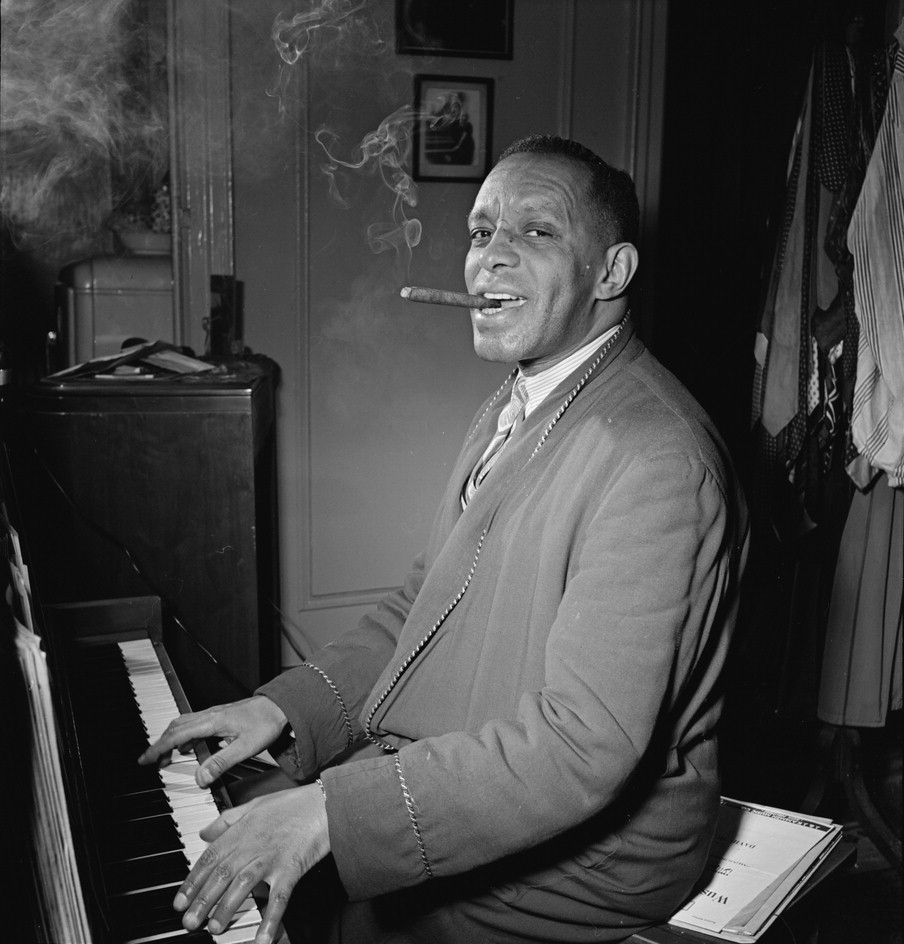
Among the fifty players in jazz journalist Gene Rizzo's ranking of the greatest jazz pianists, Willie "The Lion" Smith holds down number 48 — a flamboyant Harlem "tickler" who, with a cigar clenched in his teeth and a derby cocked on his head, helped turn ragtime into the sophisticated art of stride piano. Duke Ellington idolized him, and Art Tatum quietly borrowed from him. Smith was as famous for his swagger as for his harmony, and both were formidable.
This profile covers who Willie "The Lion" Smith was, how a self-taught Harlem pianist became one of stride's founding masters, what made his playing distinctive, and the recordings — plus scores — to start with today.
The short answer: Willie "The Lion" Smith (1893–1973) was an American stride pianist, one of the three "superstriders" alongside James P. Johnson and Fats Waller, and the most harmonically adventurous of the group.
Life and career
Smith was born in Goshen, New York, in 1893 and moved to Newark, New Jersey, as a boy; his mother, a church organist, was his only teacher. He danced for pennies in saloons before his playing eclipsed his footwork, and by his own colorful account he earned the nickname "The Lion" for front-line heroics in World War I.
Through the 1920s he was an A-list Harlem pianist for clubs and rent parties, a legend of the "cutting contests" where pianists dueled for supremacy — he liked to taunt an overmatched rival off the bench. In the 1930s he studied harmony, theory and counterpoint, deepening the classical streak in his music. He worked mostly in New York, with three tours abroad — Europe in 1949–50, South Africa in 1965 and Europe again in 1966 — and he encouraged younger players from Joe Bushkin to the young Duke Ellington, who later honored him with "Portrait of a Lion." He published his autobiography, Music on My Mind, in 1964, and played nearly to the end of his life. He died in 1973.
Style and influence
Stride piano set a striding "oompah" left hand against a syncopated right, and Smith was one of its supreme practitioners. What set him apart from his peers was his ear for harmony: he was, Rizzo suggests, the most intriguing harmonist of the superstriders, forever slipping unexpected chords and near-classical touches into a rollicking form. Ellington said outright that Tatum absorbed his "Willie Smithisms."
Smith's outsized personality was part of the package. Rizzo places him among stride's "pianists with egos the size of yachts," a world of showmen who backed up their boasts at the keyboard. His influence reached Ellington, Art Tatum and a generation of players who studied the stride tradition he helped define.
Essential recordings
Smith's recorded legacy centers on late-1930s sides and later solo statements:
| Recording | Label / year | Why it matters |
|---|---|---|
| Commodore recordings | Commodore, 1938–39 | His classic solo sides, including originals like "Echoes of Spring" that show his harmonic gift |
| The Memoirs of Willie The Lion Smith | RCA, 1968 | A spoken-and-played self-portrait late in life, pairing his stories with his playing |
| Paris recordings | 1972 | A final studio statement, cut the year before his death, with his touch intact |
Play Willie "The Lion" Smith's music
Unlike many pianists of his era, Smith left a book of his own compositions to play. Start with his best-known original, the graceful "Echoes of Spring," then take on the two-fisted showpiece "Finger Buster" and the reflective "Morning Air." A few of those pieces are open on MuseScore below, in arrangements from approachable to advanced.
Where Willie "The Lion" Smith ranks among jazz pianists
Rizzo places Smith at number 48, celebrating a stride master whose harmony outran his showmanship. See the full list in our guide to the best jazz pianists of all time, and compare Smith with fellow era-spanning pioneer Mary Lou Williams and with the virtuoso he influenced, Art Tatum. To understand the chords behind his adventurous harmony, our guide to jazz chord progressions is a good starting point.
Frequently asked questions
What is stride piano?
Stride is a Harlem piano style that grew out of ragtime, setting a "striding" left hand — a low bass note answered by a mid-range chord — against a fast, syncopated right hand. Willie "The Lion" Smith was one of its founding masters.
How did Willie Smith get the nickname "The Lion"?
By his own telling, he earned it for bravery on the front lines in World War I. The name suited a pianist famous for his bold personality and his dominance in Harlem's competitive "cutting contests."
What should I listen to first?
Start with his Commodore recordings from 1938–39, especially his original "Echoes of Spring," to hear both his stride drive and the harmonic subtlety that set him apart.
See scores on MuseScore
Rate this article
Be the first to rate this articleSee more

Virtual piano
Play a piano in your browser — use your mouse, touch, or computer keyboard. Real piano sound, and a free Pro tab with up to 61 keys, sustain, MIDI keyboard input, a metronome, and recording.

Keyboard ear trainer
Hear a note, then click the matching key on the on-screen piano — with instant feedback, the right key revealed on a miss, and a running score.

Metronome
Set the tempo and time signature and practice in steady time, or open the Pro tab for subdivisions, per-beat accents, a speed trainer, a gap trainer, click sounds, and recording yourself under the click — all free, right in your browser.

Scale finder
Pick a root note and a scale type — major, minor, the modes, pentatonic, blues — and see every note light up on the piano, spelled out for you.

Chord finder
Pick a root note and a chord type — major, minor, sevenths, suspended and more — and see the chord on the piano, named and spelled out for you.

Note finder
Pick a note and see every place it sits on the piano keyboard, named — and tap any key to hear it.