Keith Jarrett
·
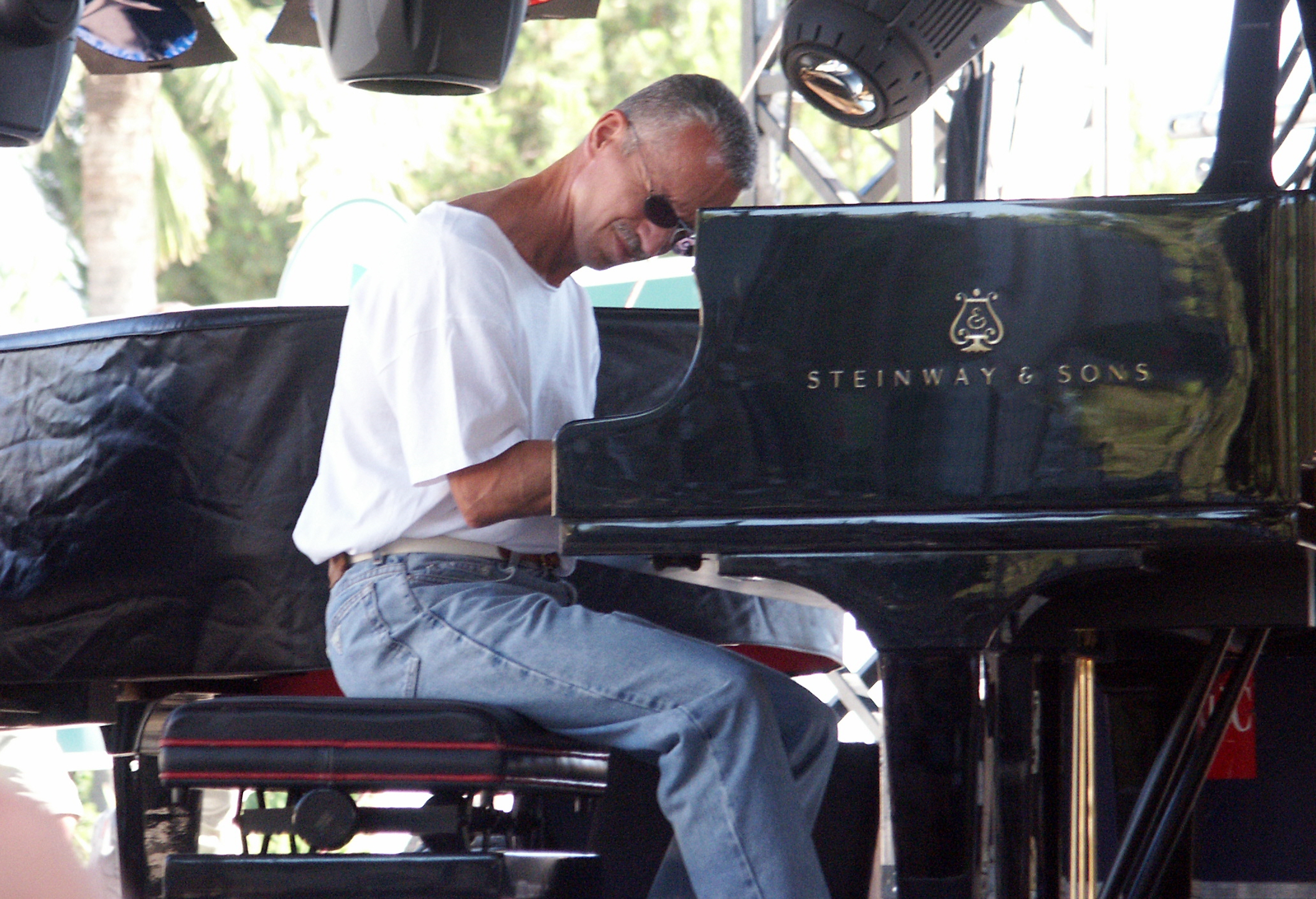
Among the fifty players in jazz journalist Gene Rizzo's ranking of the greatest jazz pianists, Keith Jarrett closes the list at number 50 — the most recent figure Rizzo canonizes, and one of the few who turned wholly improvised solo concerts into a mass audience. His 1975 Köln Concert became the best-selling solo piano album in jazz history, and his gospel-tinged, singing-out-loud playing made him instantly recognizable at the keyboard.
This profile covers who Keith Jarrett is, how a Pennsylvania prodigy became jazz's great solo improviser, what makes his playing singular, and the recordings — plus scores — to start with today.
The short answer: Keith Jarrett (born 1945) is an American jazz and classical pianist celebrated for spontaneous solo-concert improvisation and a lyrical, texturally clear touch; strokes in 2018 ended his performing career, though he remains living.
Life and career
Jarrett was born in Allentown, Pennsylvania, in 1945 and started piano at age three, a prodigy proficient on several instruments — Stan Getz once tried to hire the teenage Jarrett as a guitarist. After extensive classical training he turned down a composition scholarship to study with Nadia Boulanger, teaching himself instead. He led a trio at Berklee in 1962, moved to New York in 1965, played briefly with Art Blakey, and rose to prominence in Charles Lloyd's quartet in 1966.
A stint with Miles Davis followed (1970–71), during which he reluctantly played electric keyboards before returning exclusively to acoustic music. In 1972 he formed his "American quartet" with Dewey Redman, Charlie Haden and Paul Motian; a late-1970s "European quartet" with Jan Garbarek produced the memorable My Song. From The Köln Concert onward he built an unprecedented body of solo-concert recordings, and from the mid-1980s he ran a celebrated standards trio while also recording Bach, Shostakovich and Mozart. Two strokes in 2018 left him partly paralyzed and unable to perform publicly; he is still living as of 2026.
Style and influence
Jarrett's signature is spontaneous invention on a scale few have attempted — full-length concerts conjured from nothing, threaded with gospel vamps, folk-like melodies, audible sighs and foot-stomping. His total solo output exceeds even that of Art Tatum. Rizzo captures his difference in a phrase: Jarrett is "alone among his peers in the search for textural lucidity," always chasing clarity of line and voice.
"This is not your father's bebop piano player," Rizzo writes, and indeed Jarrett belongs to a later, freer tradition. He absorbed the early influence of Bill Evans — whose clichés he later shed — and stands alongside fellow Miles Davis alumni Chick Corea and Herbie Hancock as one of the defining pianists of his generation.
Essential recordings
Jarrett's catalog is vast; these are the essential entry points:
| Recording | Label / year | Why it matters |
|---|---|---|
| The Köln Concert | ECM, 1975 | The fully improvised solo concert that became the best-selling piano recording in jazz |
| My Song | ECM, 1978 | His "European quartet" at its most lyrical, and one of ECM's signature records |
| Standards, Vol. 1 | ECM, 1983 | The debut of his long-running standards trio, reconnecting his art to the songbook |
Play Keith Jarrett's music
Much of Jarrett's greatest work was improvised on the spot, but several pieces exist as scores you can study. Start with the famous opening of The Köln Concert, whose transcription is widely published, then the gentle theme of "My Song" and the encore "Memories of Tomorrow." A few of those pieces are open on MuseScore below, in arrangements from approachable to advanced.
Where Keith Jarrett ranks among jazz pianists
Rizzo places Jarrett at number 50, treating him as the culmination of the tradition his list surveys. See the full ranking in our guide to the best jazz pianists of all time, and compare Jarrett with his fellow Miles Davis alumni Chick Corea and Herbie Hancock, and with the lyrical model of his early years, Bill Evans. To understand the harmony beneath his improvising, our guide to jazz chord progressions is a good starting point.
Frequently asked questions
Is Keith Jarrett still alive?
Yes. Jarrett, born in 1945, is living as of 2026. Two strokes in 2018 left him partly paralyzed and ended his performing career, but he has spoken publicly about his recovery in the years since.
Why is The Köln Concert so famous?
Recorded live in 1975 and entirely improvised, it became the best-selling solo piano album in jazz history. Its flowing, gospel-tinged melodies made spontaneous concert improvisation appealing to a huge audience.
What should I listen to first?
Start with The Köln Concert (1975) for the solo improvising he is famous for, then Standards, Vol. 1 (1983) to hear his trio reinterpret the Great American Songbook.
See scores on MuseScore
Rate this article
Be the first to rate this articleSee more

Virtual piano
Play a piano in your browser — use your mouse, touch, or computer keyboard. Real piano sound, and a free Pro tab with up to 61 keys, sustain, MIDI keyboard input, a metronome, and recording.

Keyboard ear trainer
Hear a note, then click the matching key on the on-screen piano — with instant feedback, the right key revealed on a miss, and a running score.

Metronome
Set the tempo and time signature and practice in steady time, or open the Pro tab for subdivisions, per-beat accents, a speed trainer, a gap trainer, click sounds, and recording yourself under the click — all free, right in your browser.

Scale finder
Pick a root note and a scale type — major, minor, the modes, pentatonic, blues — and see every note light up on the piano, spelled out for you.

Chord finder
Pick a root note and a chord type — major, minor, sevenths, suspended and more — and see the chord on the piano, named and spelled out for you.

Note finder
Pick a note and see every place it sits on the piano keyboard, named — and tap any key to hear it.