Chick Corea
·
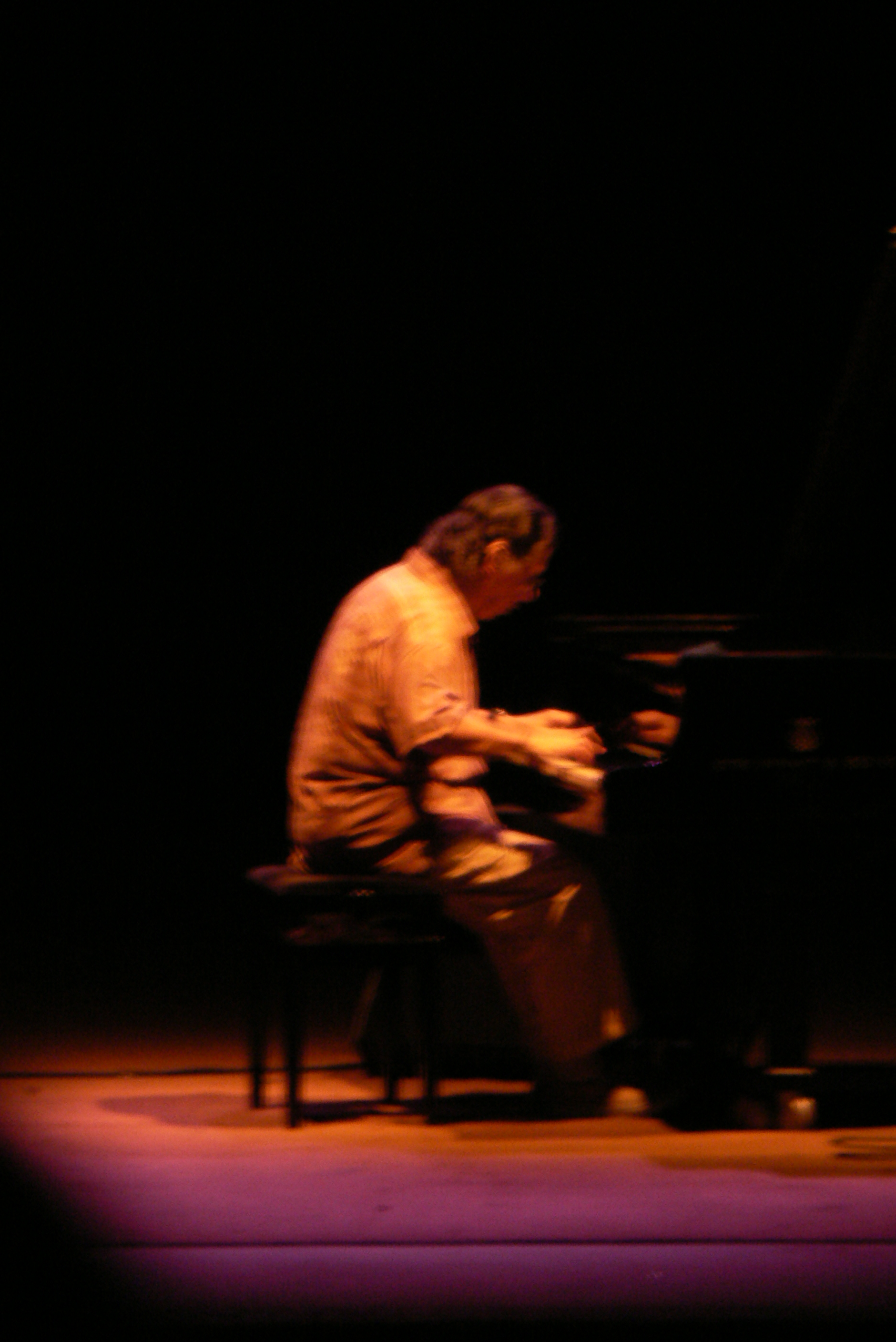
Gene Rizzo places Chick Corea at number 20 in his ranking of the greatest jazz pianists, grouping him with Herbie Hancock and Keith Jarrett as, in Rizzo's phrase, "the predominant movers and shakers of jazz piano" in the 1970s and '80s. It is a fair summary of a career that refused to sit still: Corea moved from hard-bop sideman to Miles Davis's electric revolution to fusion superstardom, and kept reinventing himself until his death in 2021.
This profile covers who Chick Corea was, how his classical training and Latin roots shaped an unmistakable sound, the compositions that became modern standards, and the recordings and scores to explore.
The short answer: Chick Corea (1941–2021) was an American pianist, keyboardist and composer — a fusion pioneer with Return to Forever, a key voice in Miles Davis's electric bands, and the writer of standards like "Spain," who won more Grammy Awards than any other jazz artist.
Life and career
Born in Chelsea, Massachusetts in 1941, Corea started at four with his father, a professional trumpeter and bandleader, and grew up steeped in both Bach and Chopin and his father's jazz records — early Bud Powell among them. By his mid-teens he was transcribing Horace Silver's solos and leading his own small group. Brief stints at Columbia and Juilliard gave way to the real education: playing the Latin bands of Mongo Santamaria and Willie Bobo, then freelancing with Stan Getz, Sarah Vaughan and others.
In 1968 he joined Miles Davis and switched to the Fender Rhodes electric piano, playing on the landmark albums that opened the fusion era. After a detour into free improvisation with the group Circle, he founded Return to Forever in 1972, which fused jazz with rock, funk and Latin music and made him a star. Over the following decades he led the Elektric Band, the Akoustic Band and Origin, and founded his own Stretch Records. He died at home in Tampa, Florida in February 2021, shortly after a cancer diagnosis, at 79.
Style and influence
Corea's playing is instantly recognizable for what Rizzo calls his "lavish use of Bartókian ornamentation" — the crisp, whole-step grace notes that flick around his melodies — married to a rhythmic sense drawn from Latin duple and triple meters. He could be percussive and angular one moment and lyrical the next, and he treated the acoustic and electric piano as different instruments with different vocabularies.
As a composer he left the deepest mark. "Spain," "La Fiesta" and "500 Miles High" became part of the standard jazz repertoire, played and studied by musicians everywhere. His restless range — from free jazz to children's songs to Mozart concertos — is itself part of the influence.
Essential recordings
Corea's catalogue is vast; these are the entry points that show his range from acoustic classic to electric pioneer:
| Recording | Label / year | Why it matters |
|---|---|---|
| Now He Sings, Now He Sobs | Solid State, 1968 | His breakthrough acoustic trio date — the pre-fusion Corea at his most exploratory |
| Bitches Brew (with Miles Davis) | Columbia, 1970 | The album that launched jazz-rock fusion, with Corea on electric piano |
| Return to Forever | ECM, 1972 | The band's debut and the birth of his signature fusion sound, home to "La Fiesta" |
| Light as a Feather | Polydor, 1973 | Return to Forever's classic — the album that introduced "Spain" |
Play Chick Corea's music
Corea's compositions are among the most rewarding to learn in modern jazz, and "Spain" in particular is a rite of passage — its melody borrows an introduction from Rodrigo's Concierto de Aranjuez. Several of his signature tunes are open on MuseScore below, in arrangements from lead sheets to full transcriptions.
Where Chick Corea ranks among jazz pianists
Rizzo ranks Corea 20th and names him one of three players who dominated jazz piano in the fusion decades. See the full ranking in our guide to the best jazz pianists of all time, and compare him with the two he is most often mentioned alongside, Herbie Hancock and Keith Jarrett. To dig into the harmony behind tunes like "Spain," start with jazz chord progressions.
Frequently asked questions
What is Chick Corea's most famous song?
"Spain," recorded by Return to Forever on the 1973 album Light as a Feather, is his best-known composition and a modern jazz standard. "La Fiesta" and "500 Miles High" are also widely played.
How many Grammy Awards did Chick Corea win?
Corea won more Grammy Awards than any other jazz artist — well over twenty across his career, from acoustic trio dates to fusion and Latin recordings — and was nominated dozens of times more.
Did Chick Corea play with Miles Davis?
Yes. Corea joined Miles Davis in 1968 and played electric piano on the era-defining fusion albums In a Silent Way and Bitches Brew, before leaving to form his own groups.
See scores on MuseScore
Rate this article
Be the first to rate this articleSee more

Virtual piano
Play a piano in your browser — use your mouse, touch, or computer keyboard. Real piano sound, and a free Pro tab with up to 61 keys, sustain, MIDI keyboard input, a metronome, and recording.

Keyboard ear trainer
Hear a note, then click the matching key on the on-screen piano — with instant feedback, the right key revealed on a miss, and a running score.

Metronome
Set the tempo and time signature and practice in steady time, or open the Pro tab for subdivisions, per-beat accents, a speed trainer, a gap trainer, click sounds, and recording yourself under the click — all free, right in your browser.

Scale finder
Pick a root note and a scale type — major, minor, the modes, pentatonic, blues — and see every note light up on the piano, spelled out for you.

Chord finder
Pick a root note and a chord type — major, minor, sevenths, suspended and more — and see the chord on the piano, named and spelled out for you.

Note finder
Pick a note and see every place it sits on the piano keyboard, named — and tap any key to hear it.