Herbie Hancock
·
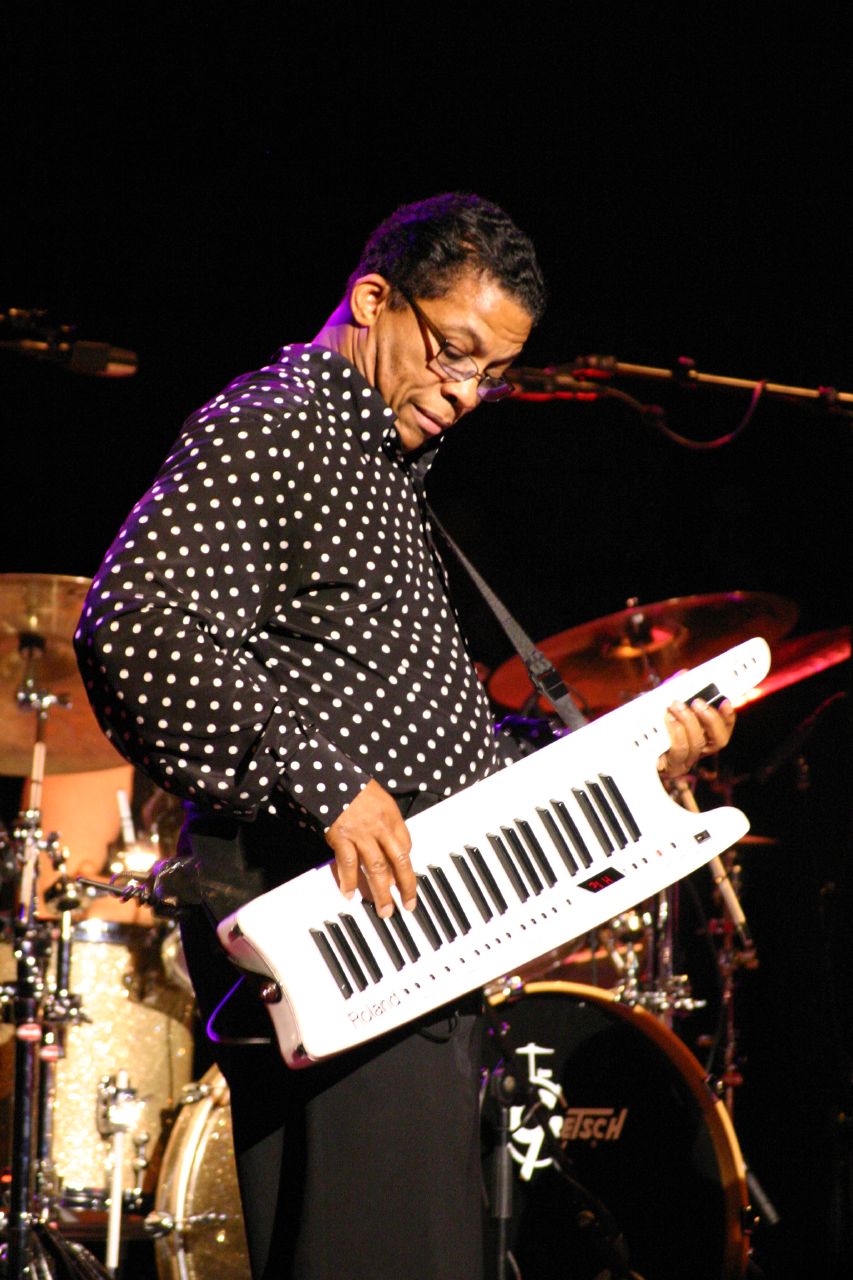
Herbie Hancock sits at number 42 in jazz journalist Gene Rizzo's ranking of the greatest jazz pianists, described as "one of the most influential pianists of his generation." Of everyone in Rizzo's fifty, Hancock is the highest-ranked player still active today — at 85 he is touring in 2026 — and his career reads like a map of modern jazz itself, from Blue Note hard bop to Miles Davis's quintet to funk, fusion and film scoring.
This profile covers who Herbie Hancock is, how he became one of the defining pianists of the last sixty years, the compositions that turned into standards, and the recordings and scores to start with.
The short answer: Herbie Hancock (born 1940) is an American pianist, keyboardist and composer whose work spans hard bop, the classic Miles Davis quintet, jazz-funk and electronic pop — the writer of "Watermelon Man" and "Cantaloupe Island," and an Academy Award and multiple Grammy winner.
Life and career
Born in Chicago in 1940, Hancock was a prodigy who took lessons from age seven and taught himself jazz by transcribing Oscar Peterson and George Shearing solos. He switched his major from engineering to music at Grinnell College, then returned to Chicago and worked with Coleman Hawkins before a lucky break — subbing for Donald Byrd's snowbound pianist — took him to New York. His 1962 Blue Note debut Takin' Off included "Watermelon Man," which became a hit after Mongo Santamaría recorded it the next year.
In the summer of 1963 he joined Miles Davis alongside Tony Williams and Ron Carter, in what became one of the most celebrated rhythm sections in jazz. He left in 1968 to lead his own groups, moved into electric jazz-funk with the hugely popular Head Hunters (1973), and later scored a surprise pop hit with "Rockit." He won a 1986 Academy Award for scoring the film 'Round Midnight, and remains active as a performer and elder statesman of the music.
Style and influence
Hancock's touch is less percussive than Chick Corea's or McCoy Tyner's — Rizzo hears him closer to Keith Jarrett's lyric, romantic side. His great gift is harmony: he weds modern European classical color to a deep feel for the blues, and his voicings have been studied by pianists for decades. Oscar Peterson thought highly enough of him to tour with him as a piano duo in the 1980s, "the mighty endorsement," as Rizzo puts it, of one of the giants.
He has never stayed in one place. The move into electronics in the 1970s angered the jazz establishment but opened the music to new audiences, and his willingness to cross styles — inspired partly by Sly and the Family Stone — is a large part of why his influence reaches well beyond jazz.
Essential recordings
Hancock's discography splits neatly between his acoustic jazz classics and his electric breakthroughs:
| Recording | Label / year | Why it matters |
|---|---|---|
| Takin' Off | Blue Note, 1962 | His leader debut, home to the much-covered "Watermelon Man" |
| Empyrean Isles | Blue Note, 1964 | Contains "Cantaloupe Island," one of his most recognizable themes |
| Maiden Voyage | Blue Note, 1965 | His classic modal statement and one of the great jazz albums of the '60s |
| Head Hunters | Columbia, 1973 | The jazz-funk landmark that became one of the best-selling jazz records ever |
Play Herbie Hancock's music
Hancock's themes are a perfect on-ramp to jazz piano: "Watermelon Man" and "Cantaloupe Island" are built on simple, memorable riffs that beginners can play and improvisers can build on for hours. Several of his signature tunes are open on MuseScore below, in arrangements from easy to advanced.
Where Herbie Hancock ranks among jazz pianists
Rizzo ranks Hancock 42nd and calls him one of his generation's most influential players. See the full ranking in our guide to the best jazz pianists of all time, and compare him with the two fusion-era giants he is usually named alongside, Chick Corea and Keith Jarrett. To learn the harmony behind his tunes, start with jazz chord progressions.
Frequently asked questions
Is Herbie Hancock still alive?
Yes. Born in 1940, Hancock is 85 in 2026 and remains active, with tour dates scheduled. He is the highest-ranked living pianist in Gene Rizzo's fifty.
What is Herbie Hancock's most famous song?
"Watermelon Man" (1962) and "Cantaloupe Island" (1964) are his most recognizable compositions, both now jazz standards. In pop terms, the 1983 hit "Rockit" reached the widest audience.
Did Herbie Hancock win an Oscar?
Yes. He won the 1986 Academy Award for Best Original Score for the film 'Round Midnight, whose central character was loosely based on the pianist Bud Powell and saxophonist Lester Young.
See scores on MuseScore
Rate this article
Be the first to rate this articleSee more

Virtual piano
Play a piano in your browser — use your mouse, touch, or computer keyboard. Real piano sound, and a free Pro tab with up to 61 keys, sustain, MIDI keyboard input, a metronome, and recording.

Keyboard ear trainer
Hear a note, then click the matching key on the on-screen piano — with instant feedback, the right key revealed on a miss, and a running score.

Metronome
Set the tempo and time signature and practice in steady time, or open the Pro tab for subdivisions, per-beat accents, a speed trainer, a gap trainer, click sounds, and recording yourself under the click — all free, right in your browser.

Scale finder
Pick a root note and a scale type — major, minor, the modes, pentatonic, blues — and see every note light up on the piano, spelled out for you.

Chord finder
Pick a root note and a chord type — major, minor, sevenths, suspended and more — and see the chord on the piano, named and spelled out for you.

Note finder
Pick a note and see every place it sits on the piano keyboard, named — and tap any key to hear it.