Lennie Tristano
·
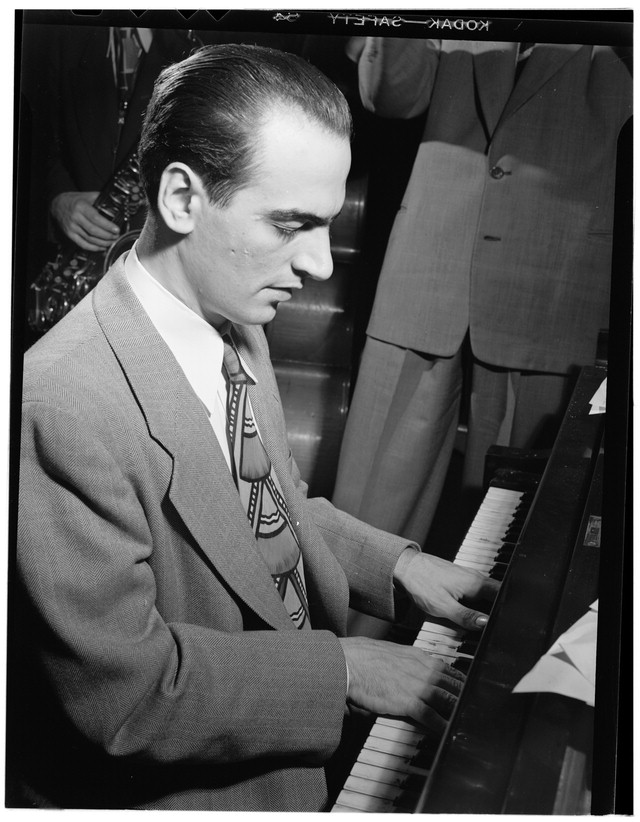
In 1949, a blind pianist and a few students walked into a New York studio and recorded two pieces with no set key, no melody, no chords, and no fixed tempo — and jazz would not catch up with them for another decade. Lennie Tristano was that pianist, a fierce intellectual whose experiments predated free jazz by ten years. Among the fifty players in jazz journalist Gene Rizzo's ranking of the greatest jazz pianists, Tristano lands at number 30, and Rizzo underlines the irony at the heart of his story: "one of jazz's true visionaries was sightless."
This profile covers who Lennie Tristano was, how a blind conservatory graduate became jazz's most demanding teacher, why his recordings still sound ahead of their time, and the recordings — plus scores — to start with today.
The short answer: Lennie Tristano (1919–1978) was an American pianist, composer, and teacher from Chicago whose dense harmony, serpentine lines, and free-improvisation experiments made him one of the music's most influential — and controversial — innovators.
Life and career
Tristano was born in Chicago in 1919, during an influenza epidemic that gradually cost him his sight; he was completely blind by the age of eight. He began piano at seven, graduated from the American Conservatory of Music, and became proficient on reeds, cello, guitar, and drums as well.
He started out imitating Earl Hines but soon evolved into a personal stylist with a deep aversion to conventional harmony, meter, and phrasing. Moving to New York in 1946, he led a trio in the mold of Nat King Cole's and drew a small, devoted circle of players — the saxophonists Lee Konitz and Warne Marsh, guitarist Billy Bauer — around his ideas. In 1950 he opened a teaching studio in Queens and became a kind of musical guru, prizing teaching over performing. He recorded relatively little for the rest of his life and died in 1978.
Style and influence
Tristano's playing is all long, winding melodic lines laid over thick chords, delivered with a cool, even touch that keeps the emotional temperature low while the harmony grows dizzyingly complex. His teaching aimed to subvert the very things he blamed for dull improvising: clear bar lines, fixed meters, third-based harmony, and locked tempos.
He turned that philosophy into recorded fact. The 1949 pieces "Intuition" and "Digression" used no predetermined key, melody, chords, or tempo — free improvisation years before Ornette Coleman. A 1955 Atlantic date overdubbed and sped up his own solos against himself, anticipating the multi-tracked piano of Bill Evans's later Conversations with Myself. Critics complained he was "too cerebral," and his influence flowed less through fame than through students; Rizzo notes that few figures in jazz match him for controversy and misunderstanding.
Essential recordings
Tristano is famously under-recorded, but the little he left is essential:
| Recording | Label / year | Why it matters |
|---|---|---|
| "Intuition" / "Digression" | Capitol, 1949 | Free improvisation with no key, chords, or tempo — a decade ahead of the free-jazz movement |
| Lennie Tristano | Atlantic, 1955 | The overdubbed solo experiments plus a burning live quartet — his best-known album |
| Crosscurrents | Capitol (1949 sides) | Collects the historic sextet sessions with Konitz, Marsh, and Bauer that defined his "school" |
| The New Tristano | Atlantic, 1962 | A solo album of staggering left-hand independence and rhythmic layering |
Play Lennie Tristano's music
Tristano built new melodies over the chord changes of standards, so his own tunes are a master class in line-writing. Start with "317 East 32nd Street," named for his Manhattan loft, or the tape-altered "Line Up," then trace how his lines float free of the bar line. A few of his compositions are open on MuseScore below.
Where Lennie Tristano ranks among jazz pianists
Rizzo places Tristano at 30, a rank that undersells his outsize influence on how jazz thinks about freedom. See the full list in our guide to the best jazz pianists of all time, and compare Tristano with his early model Earl Hines, the player he prefigured, Bill Evans, and his classically minded contemporary Dave Brubeck. To understand the harmony he pushed against, start with our guide to jazz chord progressions.
Frequently asked questions
Was Lennie Tristano really blind?
Yes. An influenza epidemic around his birth in 1919 gradually destroyed his sight, and he was completely blind by age eight. He learned music by ear and touch, which makes the harmonic complexity of his playing all the more striking.
Did Lennie Tristano invent free jazz?
Not single-handedly, but his 1949 recordings "Intuition" and "Digression" — improvised with no set key, melody, chords, or tempo — predate Ornette Coleman's free jazz by about a decade, making Tristano a crucial forerunner.
What should I listen to first?
Start with the 1955 Atlantic album Lennie Tristano for the overdubbed solos and the live quartet, then hear the 1949 "Intuition" for the historic free-improvisation experiment.
See scores on MuseScore
Rate this article
Be the first to rate this articleSee more

Virtual piano
Play a piano in your browser — use your mouse, touch, or computer keyboard. Real piano sound, and a free Pro tab with up to 61 keys, sustain, MIDI keyboard input, a metronome, and recording.

Keyboard ear trainer
Hear a note, then click the matching key on the on-screen piano — with instant feedback, the right key revealed on a miss, and a running score.

Metronome
Set the tempo and time signature and practice in steady time, or open the Pro tab for subdivisions, per-beat accents, a speed trainer, a gap trainer, click sounds, and recording yourself under the click — all free, right in your browser.

Scale finder
Pick a root note and a scale type — major, minor, the modes, pentatonic, blues — and see every note light up on the piano, spelled out for you.

Chord finder
Pick a root note and a chord type — major, minor, sevenths, suspended and more — and see the chord on the piano, named and spelled out for you.

Note finder
Pick a note and see every place it sits on the piano keyboard, named — and tap any key to hear it.