McCoy Tyner
·
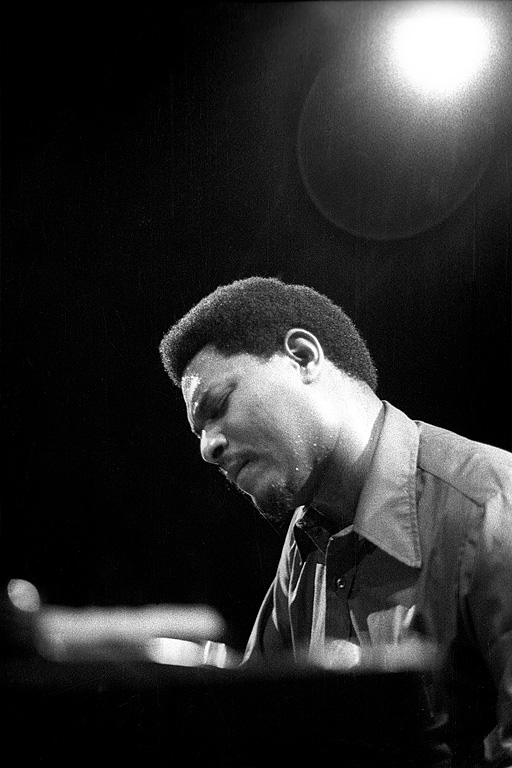
Play a chord stacked in fourths, hammer it with your left hand while your right pours out a cascade of modal scales, and you are reaching for a sound McCoy Tyner all but invented. Among the fifty players in jazz journalist Gene Rizzo's ranking of the greatest jazz pianists, Tyner sits at number 11 — the pianist of John Coltrane's classic quartet, and, in Rizzo's words, "the most influential pianist since Bill Evans."
This profile covers who McCoy Tyner was, how he built his sound inside the Coltrane quartet, what makes quartal, modal piano so powerful, and the recordings — plus scores — to start with today.
The short answer: McCoy Tyner (1938–2020) was a Philadelphia-born pianist and composer whose percussive attack, chords built in fourths and sweeping modal lines reshaped jazz piano, first with John Coltrane and then across a long solo career.
Life and career
Tyner was born in Philadelphia in 1938 and raised in a musical neighborhood — Bud and Richie Powell lived nearby and would drop in on rehearsals of the seven-piece band the teenaged Tyner led. He studied privately and at the West Philadelphia Music School, then took harmony and theory at the Granoff School. Fellow Philadelphian Benny Golson recruited him for the new Jazztet, where Tyner made his first recordings, including the crossover hit "Killer Joe."
He then joined John Coltrane's quartet with Elvin Jones and Jimmy Garrison, a group united by a refusal to be standard-issue beboppers. After leaving Coltrane, Tyner's career floundered in the late 1960s and early 1970s — he once considered driving a cab — before a series of records for Milestone revived it and confirmed his stature. His touch grew more percussive and his composing and arranging more ambitious, taking in large ensembles, strings, wordless chorus and orchestra. A teenage convert to Islam, he also took the name Sulaimon Saud. He died in 2020 at the age of 81.
Style and influence
Tyner's language rests on quartal harmony — chords voiced in stacked fourths rather than conventional thirds — set against dense textures and long, effusive modal scales. Rizzo describes the result as "a boiling cauldron of quartal harmony, dense textures, and effusive modal scales," and the phrase captures the physicality of it: this is piano played with an almost drum-like force. Where Bill Evans whispered, Tyner surged.
The influences ran from Bud Powell's bebop foundation to Coltrane's modal vision, and the debt Tyner left behind is enormous — a whole generation of players, from Benny Green onward, learned his voicings. That is why Rizzo can call him the most influential pianist to arrive after Evans without much argument.
Essential recordings
Tyner's catalog is vast, but a handful of records define the sound:
| Recording | Label / year | Why it matters |
|---|---|---|
| The Real McCoy | Blue Note, 1967 | The cornerstone; home to "Passion Dance," "Contemplation" and "Search for Peace" |
| Song for My Lady | Milestone, 1973 | A key title from the Milestone run that revived his career |
| Enlightenment | Milestone, 1973 | A blazing live set that shows the full percussive, modal intensity of his band |
| A Love Supreme (with John Coltrane) | Impulse!, 1965 | The quartet masterpiece; the clearest record of what Tyner brought to Coltrane |
Play McCoy Tyner's music
The fastest way into Tyner's sound is to voice a chord in fourths and feel how open and unresolved it is compared with a normal triad — that ambiguity is the doorway to modal playing. Start with the theme of "Passion Dance" or "Search for Peace," then build the quartal voicings under it. A few of his signature pieces are open on MuseScore below, in arrangements from approachable to advanced.
Where McCoy Tyner ranks among jazz pianists
Rizzo places Tyner eleventh, at the peak of modal and post-bop piano. See the full list in our guide to the best jazz pianists of all time, and compare him with the man Rizzo measures him against, Bill Evans, and with his ranking neighbors Red Garland and Gene Harris. To understand the harmony behind his sound, our guide to jazz chord progressions is a good starting point.
Frequently asked questions
What is quartal harmony?
Quartal harmony builds chords by stacking intervals of a fourth instead of the usual thirds. The result sounds open and unresolved, which suits modal jazz — and Tyner used it so distinctively that the sound is now associated with his name.
Which Coltrane albums feature McCoy Tyner?
Tyner was the pianist in Coltrane's classic quartet from 1960 to 1965, appearing on landmark albums such as My Favorite Things (1961) and A Love Supreme (1965).
What should I listen to first?
Start with The Real McCoy (1967), especially "Passion Dance," to hear his mature quartal, modal style as a leader, then go back to A Love Supreme for his role in the Coltrane quartet.
See scores on MuseScore
Rate this article
Be the first to rate this articleSee more

Virtual piano
Play a piano in your browser — use your mouse, touch, or computer keyboard. Real piano sound, and a free Pro tab with up to 61 keys, sustain, MIDI keyboard input, a metronome, and recording.

Keyboard ear trainer
Hear a note, then click the matching key on the on-screen piano — with instant feedback, the right key revealed on a miss, and a running score.

Metronome
Set the tempo and time signature and practice in steady time, or open the Pro tab for subdivisions, per-beat accents, a speed trainer, a gap trainer, click sounds, and recording yourself under the click — all free, right in your browser.

Scale finder
Pick a root note and a scale type — major, minor, the modes, pentatonic, blues — and see every note light up on the piano, spelled out for you.

Chord finder
Pick a root note and a chord type — major, minor, sevenths, suspended and more — and see the chord on the piano, named and spelled out for you.

Note finder
Pick a note and see every place it sits on the piano keyboard, named — and tap any key to hear it.