Benny Green
·
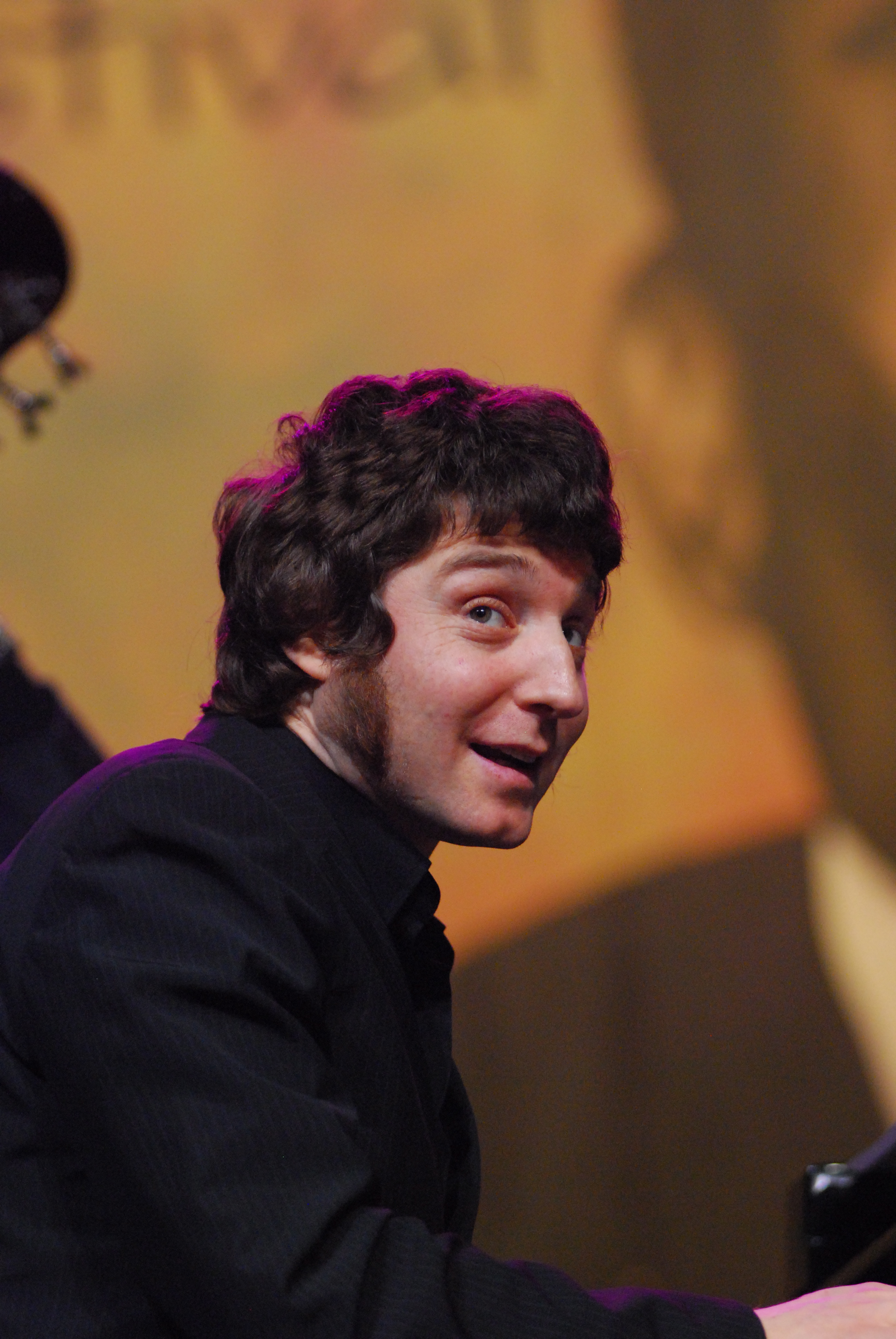
When Oscar Peterson wanted to name jazz's most promising young pianist, he picked Benny Green. In jazz journalist Gene Rizzo's ranking of the fifty greatest jazz piano players, Green places sixth — a rare spot for a player of his generation — and he earns it with a deep grounding in the blues, an authoritative swing, and a reverence for the tradition he grew up inside.
This profile covers who Benny Green is, how he apprenticed with jazz royalty, what defines his hard-bop style, and the recordings — plus scores — to start with today.
The short answer: Benny Green (born 1963) is an American pianist raised in Berkeley, California, whose blues-soaked, hard-swinging style — forged in Betty Carter's and Art Blakey's bands — makes him one of the leading keepers of the bebop and hard-bop tradition, still recording and touring in 2026.
Life and career
Green was born in New York City in 1963 and raised in Berkeley, California, the son of a tenor saxophonist. He was classically trained from age seven and began studying jazz at nine, playing in the Berkeley High School band and working with saxophonist Joe Henderson and trumpeter Woody Shaw before his family returned to New York in 1982.
His real education came in two of jazz's great "finishing schools": singer Betty Carter's trio, where he played from 1983 to 1987, and Art Blakey's Jazz Messengers from 1987 to 1989. He then joined trumpeter Freddie Hubbard before forming his own trio in 1992. In 1993 Oscar Peterson chose him as the first winner of the Glenn Gould Protégé Prize, and he has led a distinguished recording career since, including celebrated duo albums with guitarist Russell Malone.
Style and influence
Green's playing synthesizes his heroes — Horace Silver's funk, Oscar Peterson's power, McCoy Tyner's density and Herbie Hancock's harmonic curiosity — into a personal, hard-swinging whole. Rizzo notes that "Benny Green's accomplishments belie his years," and the maturity shows in his authoritative single-note lines and blues-laced voicings.
He knows Bill Evans's interactive trio innovations but chooses a different path, keeping the piano as the dominant voice in the group. Above all he is committed to the blues and to swing — the twin pillars of the tradition — which is exactly why an elder like Peterson singled him out as evidence that the music was in good hands.
Essential recordings
| Recording | Label / year | Why it matters |
|---|---|---|
| Greens | Blue Note, 1991 | An early trio statement that announced a major new mainstream voice |
| Testifyin'! Live at the Village Vanguard | Blue Note, 1992 | A burning live trio date that captures his swing in full flight |
| These Are Soulful Days | Blue Note, 1999 | A Blue Note–tradition tribute with Russell Malone and Christian McBride |
| Jazz at the Bistro | Telarc, 2003 | His acclaimed guitar-and-piano duo with Russell Malone |
Play Benny Green's music
Green is steeped in the hard-bop songbook, so the best way in is through the repertoire he grew up inside. Try Horace Silver's soulful "Song for My Father," Benny Golson's "Along Came Betty" from the Jazz Messengers book, and the standards he gathers on These Are Soulful Days. A few of these pieces are open on MuseScore below, in arrangements from approachable to advanced.
Where Benny Green ranks among jazz pianists
Rizzo places Green sixth, just behind Monty Alexander and ahead of André Previn — a striking ranking for a living player, and a bet on the future of the tradition. See the full list in our guide to the best jazz pianists of all time, and compare his lineage with his mentor Oscar Peterson. To learn the harmony behind his blues and swing, start with our guide to jazz chord progressions.
Frequently asked questions
Is Benny Green still active?
Yes. Born in 1963, Benny Green is still recording and touring in 2026, most recently in solo and trio settings.
Who did Benny Green play with?
He came up in Betty Carter's trio and Art Blakey's Jazz Messengers, then worked with Freddie Hubbard, and was chosen by Oscar Peterson as the first winner of the Glenn Gould Protégé Prize.
What should I listen to first?
Start with Greens (1991) for the early trio, then These Are Soulful Days (1999) for his blues-rooted tribute to the Blue Note tradition.
See scores on MuseScore
Rate this article
Be the first to rate this articleSee more

Virtual piano
Play a piano in your browser — use your mouse, touch, or computer keyboard. Real piano sound, and a free Pro tab with up to 61 keys, sustain, MIDI keyboard input, a metronome, and recording.

Keyboard ear trainer
Hear a note, then click the matching key on the on-screen piano — with instant feedback, the right key revealed on a miss, and a running score.

Metronome
Set the tempo and time signature and practice in steady time, or open the Pro tab for subdivisions, per-beat accents, a speed trainer, a gap trainer, click sounds, and recording yourself under the click — all free, right in your browser.

Scale finder
Pick a root note and a scale type — major, minor, the modes, pentatonic, blues — and see every note light up on the piano, spelled out for you.

Chord finder
Pick a root note and a chord type — major, minor, sevenths, suspended and more — and see the chord on the piano, named and spelled out for you.

Note finder
Pick a note and see every place it sits on the piano keyboard, named — and tap any key to hear it.