Hampton Hawes
·
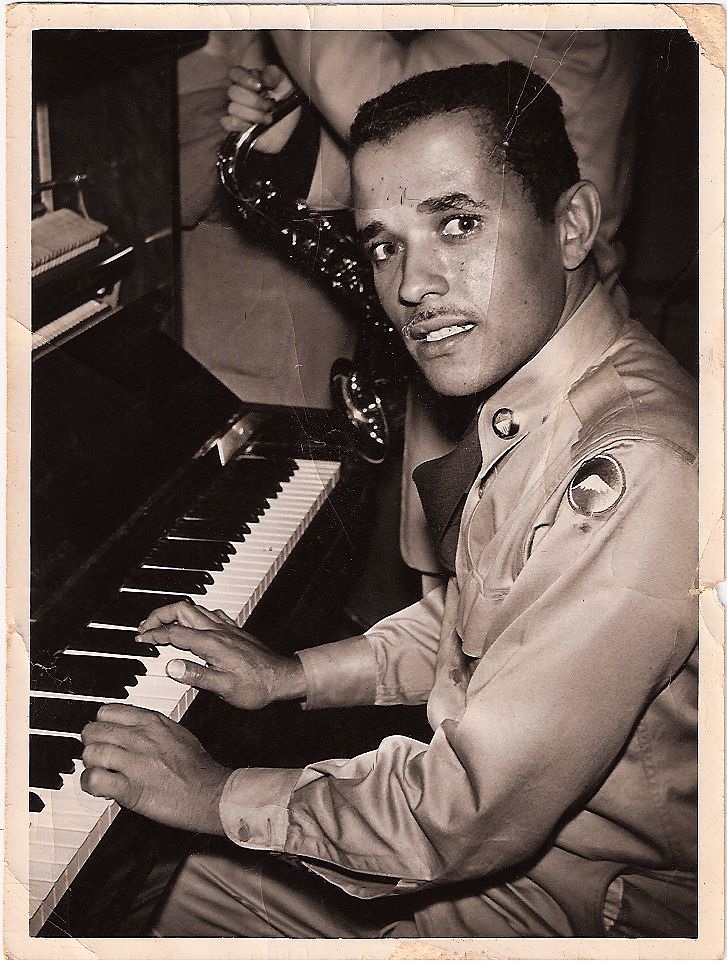
The cliché says West Coast jazz was cool, tidy and a little bloodless. Hampton Hawes is the pianist who proves it wrong. Among the fifty players in jazz journalist Gene Rizzo's ranking of the greatest jazz pianists, Hawes lands at number 14 — a hard-swinging, fiery Los Angeles bebopper whose playing burned hotter than the region's reputation. His best work, Rizzo writes, "reduced Powell's influence to an echo."
This profile covers who Hampton Hawes was, how a preacher's son from Los Angeles became a bebop sensation, what gave his playing its heat, and the recordings — plus scores — to start with today.
The short answer: Hampton Hawes (1928–1977) was a self-taught Los Angeles pianist whose bluesy, hard-swinging bebop — captured on his classic mid-1950s trio records — made him a star before a prison term interrupted his career.
Life and career
Hawes was born in Los Angeles in 1928 and began a lifelong course of self-instruction at nine, copying boogie-woogie patterns off Earl Hines and Albert Ammons records. In junior high a classmate, the future multi-reedist Eric Dolphy, played him a Charlie Parker record, and Hawes committed to bebop on the spot. He was working professionally with Big Jay McNeely by his mid-teens and, before a 1952–54 Army hitch, passed through the bands of Dexter Gordon, Wardell Gray and Shorty Rogers, wearing an obvious Bud Powell influence.
He later said his isolated Army years gave him room to polish his playing and forge a personal voice. Back home, The Trio, Vols. 1–3 for Contemporary made him a sensation by 1955. Then his career was interrupted by a ten-year prison sentence for heroin possession; he was pardoned by President Kennedy in 1964. His post-pardon work declined as he flirted with electronics and pop, and his bitter autobiography Raise Up Off Me appeared shortly before his death in 1977.
Style and influence
Hawes's mature style was bluesy and physical: left-hand stabs at acrid intervals with selective voice-leading, and long, staccato right-hand phrases shaped by pauses and sudden shifts of register. It swung hard and felt lived-in. Rizzo prized exactly this — "harder-swinging, fire-in-the-belly piano playing" — as an answer to anyone who thought California jazz was all restraint.
He absorbed Bud Powell, Earl Hines, Albert Ammons and Charlie Parker, then metabolized them into something of his own; by his peak, the Powell influence was, in Rizzo's phrase, only an echo. His earthy approach in turn fed the soul-jazz current that Horace Silver would carry forward.
Essential recordings
Hawes's reputation rests above all on his Contemporary years:
| Recording | Label / year | Why it matters |
|---|---|---|
| The Trio, Vol. 1 | Contemporary, 1955 | The record that made him a sensation; hard-swinging bebop at its most alive |
| Everybody Likes Hampton Hawes, Vol. 3: The Trio | Contemporary, 1956 | The trio at full stretch, and the source of his gospel-jazz original "The Sermon" |
| All Night Session, Vols. 1–3 | Contemporary, 1956 | Marathon quartet dates that capture his stamina and heat over long stretches |
| Raise Up Off Me (memoir) | 1974 | Not a record but essential context: his own blunt account of the career's arc |
Play Hampton Hawes's music
Hawes rewards anyone learning to swing a bebop line with conviction. Take a blues, keep the left hand spare and stabbing, and shape the right-hand phrases with silence as much as notes — that space is where his fire lives. His original "The Sermon" is a good, groove-based place to start. A few of his signature vehicles are open on MuseScore below, in arrangements from approachable to advanced.
Where Hampton Hawes ranks among jazz pianists
Rizzo places Hawes fourteenth, among the hard-bop players. See the full list in our guide to the best jazz pianists of all time, and compare him with the soul-jazz architect he helped point the way to, Horace Silver, and with his ranking neighbors Kenny Drew and Thelonious Monk. To understand the harmony under his lines, our guide to jazz chord progressions is a good starting point.
Frequently asked questions
Was Hampton Hawes a West Coast jazz pianist?
Yes, but not in the cool, restrained sense the label usually implies. Hawes was based in Los Angeles, yet his playing was hard-swinging and blues-driven — proof that West Coast jazz could burn as hot as anything from New York.
What happened to Hampton Hawes's career?
It was interrupted by a ten-year prison sentence for heroin possession. President Kennedy pardoned him in 1964, but his later work never quite recovered its early momentum, a story he told frankly in his memoir Raise Up Off Me.
What should I listen to first?
Start with The Trio, Vol. 1 (1955), the record that made his name, to hear the fiery, blues-soaked bebop that put him in Rizzo's fifty.
See scores on MuseScore
Rate this article
Be the first to rate this articleSee more

Virtual piano
Play a piano in your browser — use your mouse, touch, or computer keyboard. Real piano sound, and a free Pro tab with up to 61 keys, sustain, MIDI keyboard input, a metronome, and recording.

Keyboard ear trainer
Hear a note, then click the matching key on the on-screen piano — with instant feedback, the right key revealed on a miss, and a running score.

Metronome
Set the tempo and time signature and practice in steady time, or open the Pro tab for subdivisions, per-beat accents, a speed trainer, a gap trainer, click sounds, and recording yourself under the click — all free, right in your browser.

Scale finder
Pick a root note and a scale type — major, minor, the modes, pentatonic, blues — and see every note light up on the piano, spelled out for you.

Chord finder
Pick a root note and a chord type — major, minor, sevenths, suspended and more — and see the chord on the piano, named and spelled out for you.

Note finder
Pick a note and see every place it sits on the piano keyboard, named — and tap any key to hear it.