Nat "King" Cole
·
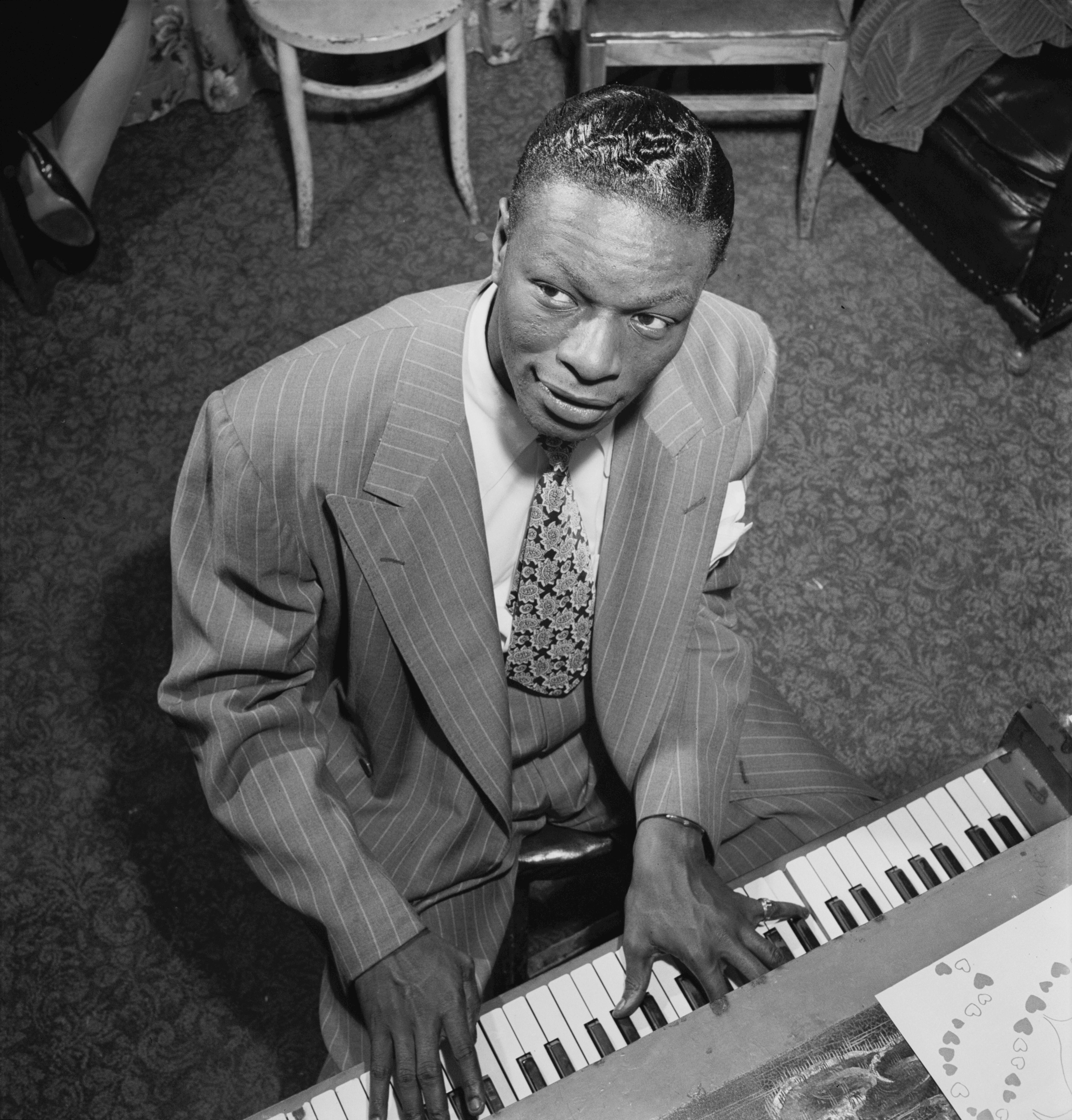
The world remembers Nat "King" Cole as one of the great popular singers of the twentieth century. Jazz musicians remember something else: a supple, riffing pianist who could swing a room without a drummer and whose touch quietly reshaped how the instrument was played. Cole ranks number 24 in jazz journalist Gene Rizzo's list of the greatest jazz pianists — and it is the pianist, not the singer, that this profile is about.
This profile covers who Nat "King" Cole was at the keyboard, how his drummerless trio changed small-group jazz, why his piano touch influenced a generation, and the recordings and scores to explore.
The short answer: Nat "King" Cole (1919–1965) was an American pianist and singer whose lightly swinging, riff-based piano and pioneering drummerless trio made him a major jazz figure well before his vocal stardom took over.
Life and career
Cole was born in Montgomery, Alabama in 1919 and raised in Chicago. As a teenager he toured as musical director of the revue Shuffle Along in 1936; when the show folded in Los Angeles he liked the climate and stayed. In 1938 he formed a drummerless group with guitarist Oscar Moore and bassist Wesley Prince — the King Cole Trio — whose swing-era success proved a solid beat did not require a big band, or even a drummer. The format was widely copied.
The trio began a long Capitol association in 1942 and joined the first Jazz at the Philharmonic concerts in 1944, winning Down Beat and Esquire jazz-piano polls along the way. But his singing took over: hits like "Straighten Up and Fly Right" hastened the trio's end, and it dissolved in 1951. His 1956 album After Midnight was a jazz last hurrah. He died in 1965, at 45, of lung cancer — by then one of the world's best-loved singers.
Style and influence
As a pianist Cole was a velvet-handed descendant of Earl Hines, dispensing a pulsing, riffy lyricism in small, perfectly judged doses. He understood space: rather than fill every bar, he left room, and that economy became his most quietly influential trait. Rizzo notes that even in his final years "his fingers were still pickpocket-nimble."
The debt later pianists owed him is specific. His use of space resonated with Red Garland, Ahmad Jamal and Tommy Flanagan; his chord voicings fed into Bill Evans; and Oscar Peterson built directly on his touch. For a player often filed under "pop," Cole's fingerprints are all over modern jazz piano.
Essential recordings
To hear Cole the pianist, start with the trio sides and the one late album that put the piano back up front:
| Recording | Label / year | Why it matters |
|---|---|---|
| The Complete Capitol Recordings of the Nat King Cole Trio | Mosaic (18-CD reissue), 1942 onward | The definitive gathering of the trio that redefined small-group swing |
| After Midnight | Capitol, 1956 | His jazz last hurrah, with the piano restored to center stage |
| "Sweet Lorraine" | Decca, 1940 | The trio's first hit and an early showcase for his relaxed swing |
| The Nat King Cole Trio at JATP | 1944 | Live proof of his jazz credentials at the first Jazz at the Philharmonic concerts |
Play Nat "King" Cole's music
Cole's trio repertoire is a joy to learn and a lesson in swinging economy. Start with his own "Straighten Up and Fly Right," the standard "Sweet Lorraine," or the road-trip staple "Route 66," and listen for how much he leaves out. A few are open on MuseScore below in arrangements from approachable to advanced.
Where Nat "King" Cole ranks among jazz pianists
Rizzo places Cole 24th, judging him as a pianist rather than a singer. See the full list in our guide to the best jazz pianists of all time, and compare him with the pianist he descended from, Earl Hines, and two he influenced, Oscar Peterson and Ahmad Jamal. To hear how his voicings work, start with our guide to jazz chord progressions.
Frequently asked questions
Was Nat "King" Cole a jazz pianist before he was a singer?
Yes. Cole first made his name as a jazz pianist and leader of the King Cole Trio in the late 1930s and '40s, winning jazz-piano polls. His singing career grew out of the trio and eventually eclipsed his playing.
What was special about the King Cole Trio?
It had no drummer. The piano-guitar-bass lineup swung hard on its own, showing that a small group did not need a full rhythm section, and the drummerless format was copied widely across jazz.
Which pianists did Nat "King" Cole influence?
His touch and use of space shaped Oscar Peterson, Red Garland, Ahmad Jamal and Tommy Flanagan, while his chord voicings fed into Bill Evans — a large influence for a player better known to the public as a singer.
See scores on MuseScore
Rate this article
Be the first to rate this articleSee more

Virtual piano
Play a piano in your browser — use your mouse, touch, or computer keyboard. Real piano sound, and a free Pro tab with up to 61 keys, sustain, MIDI keyboard input, a metronome, and recording.

Keyboard ear trainer
Hear a note, then click the matching key on the on-screen piano — with instant feedback, the right key revealed on a miss, and a running score.

Metronome
Set the tempo and time signature and practice in steady time, or open the Pro tab for subdivisions, per-beat accents, a speed trainer, a gap trainer, click sounds, and recording yourself under the click — all free, right in your browser.

Scale finder
Pick a root note and a scale type — major, minor, the modes, pentatonic, blues — and see every note light up on the piano, spelled out for you.

Chord finder
Pick a root note and a chord type — major, minor, sevenths, suspended and more — and see the chord on the piano, named and spelled out for you.

Note finder
Pick a note and see every place it sits on the piano keyboard, named — and tap any key to hear it.