Hank Jones
·
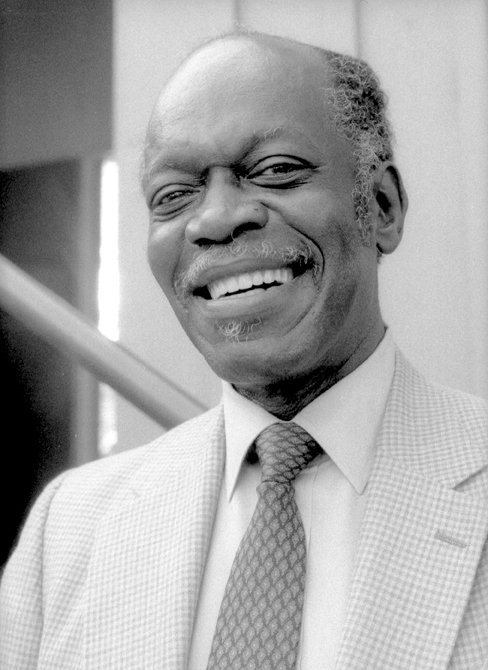
If there is a quiet hero in the history of jazz piano, it is Hank Jones. For six decades he was the pianist other musicians trusted absolutely — the one who could sit down behind any singer or soloist and make everything sound right. Jones ranks number 19 in jazz journalist Gene Rizzo's list of the greatest jazz pianists, and while flashier names sit near him, few match his taste, his harmonic depth, or his sheer reliability.
This profile covers who Hank Jones was, how the eldest of a legendary musical family became jazz's definitive accompanist, what made his touch so admired, and the recordings and scores to explore.
The short answer: Hank Jones (1918–2010) was an American pianist celebrated for a velvet touch and a superb harmonic ear — a swing-to-bebop bridge, the accompanist of choice for Ella Fitzgerald and many others, and the head of the storied Detroit piano lineage.
Life and career
Born in 1918 and raised in Pontiac, Michigan, Jones apprenticed around Pontiac and nearby Detroit before making his way to New York's 52nd Street, where he worked with the top attractions between 1944 and 1948. He recorded for Norman Granz and toured with Jazz at the Philharmonic until 1953, and became the first of many "singers' pianists" to back Ella Fitzgerald, later accompanying Billy Eckstine, Sarah Vaughan and Abbey Lincoln as well.
From 1959 to 1975 he held a steady job as a CBS staff musician, then served as pianist and conductor for the Broadway hit Ain't Misbehavin'. Later he anchored the Great Jazz Trio with Ron Carter and Tony Williams and cut duet albums with peers including Tommy Flanagan and George Shearing. He recorded with his brothers, trumpeter Thad and drummer Elvin, and kept working at the highest level into his late eighties. He died in 2010.
Style and influence
Jones solved what an earlier era called "the Powell problem" — how to keep bebop's speed without losing the fuller sound of the older stride and swing pianists. Taking a cue from Al Haig, he fused the harmonic richness of Art Tatum and Teddy Wilson with the newer bebop vocabulary, and topped it with what Rizzo calls "a velvet touch." The result was a standards-centered style of unusual polish: fuller left-hand voicings, immaculate voice leading, and a swing that never forced.
His influence is felt most through the Detroit piano school he stands at the head of — a lineage that includes Tommy Flanagan, Barry Harris and Sir Roland Hanna. As an accompanist he set a standard that working pianists still measure themselves against.
Essential recordings
Jones's discography is enormous; these entries show the accompanist, the trio player and the solo master:
| Recording | Label / year | Why it matters |
|---|---|---|
| The Trio | Savoy, 1955 | An early trio date that shows his elegant swing-to-bebop synthesis in full |
| Keepin' Up with the Joneses | MetroJazz, 1958 | A rare studio meeting with his brothers Thad and Elvin |
| The Great Jazz Trio at the Village Vanguard | East Wind, 1977 | Jones with Ron Carter and Tony Williams — modern, interactive trio playing |
| When There Is Love (with Abbey Lincoln) | Verve, 1992 | An intimate late duet that distills his gift as an accompanist |
Play Hank Jones's music
Jones was an interpreter rather than a composer, so the way into his playing is through the standards he refined. Try a ballad like "Autumn Leaves," the Waller repertoire he championed in Ain't Misbehavin', or the bright standard "Bluesette," and listen for the fullness of his voicings. A few are open on MuseScore below in arrangements from approachable to advanced.
Where Hank Jones ranks among jazz pianists
Rizzo ranks Jones 19th and treats him as a model of taste and versatility. See the full ranking in our guide to the best jazz pianists of all time, and compare him with the swing stylist he drew on, Teddy Wilson, and the Detroit protégé he most directly influenced, Tommy Flanagan. To hear how his rich voicings are built, start with our guide to jazz chord progressions.
Frequently asked questions
Was Hank Jones related to Thad and Elvin Jones?
Yes. Hank was the eldest of three musical brothers: trumpeter and bandleader Thad Jones and drummer Elvin Jones, the latter famous for his work with John Coltrane. The three recorded together on Keepin' Up with the Joneses.
Who did Hank Jones play for?
He was one of jazz's most sought-after accompanists, backing Ella Fitzgerald, Billy Eckstine, Sarah Vaughan and Abbey Lincoln, among many others, and spent sixteen years as a CBS staff pianist.
What made Hank Jones's playing special?
A famously gentle touch, rich and accurate harmony, and effortless swing. He bridged the swing and bebop eras and stands at the head of the Detroit piano tradition that produced Tommy Flanagan, Barry Harris and Roland Hanna.
See scores on MuseScore
Rate this article
Be the first to rate this articleSee more

Virtual piano
Play a piano in your browser — use your mouse, touch, or computer keyboard. Real piano sound, and a free Pro tab with up to 61 keys, sustain, MIDI keyboard input, a metronome, and recording.

Keyboard ear trainer
Hear a note, then click the matching key on the on-screen piano — with instant feedback, the right key revealed on a miss, and a running score.

Metronome
Set the tempo and time signature and practice in steady time, or open the Pro tab for subdivisions, per-beat accents, a speed trainer, a gap trainer, click sounds, and recording yourself under the click — all free, right in your browser.

Scale finder
Pick a root note and a scale type — major, minor, the modes, pentatonic, blues — and see every note light up on the piano, spelled out for you.

Chord finder
Pick a root note and a chord type — major, minor, sevenths, suspended and more — and see the chord on the piano, named and spelled out for you.

Note finder
Pick a note and see every place it sits on the piano keyboard, named — and tap any key to hear it.