Roland Hanna
·
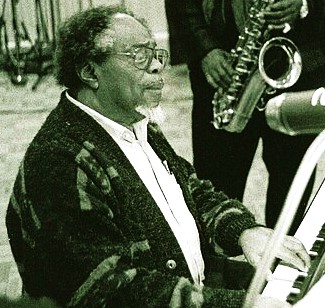
Among the fifty players in jazz journalist Gene Rizzo's ranking of the greatest jazz pianists, Roland Hanna appears at number 49 — the youngest and most academically trained member of the celebrated "Detroit school" of pianists. Knighted by a Liberian president and tenured at a New York college, Hanna built a triple career as a pianist, composer and teacher, and he could shift from a delicate classical prelude to a combustible big-band solo without ever sounding like two different players.
This profile covers who Roland Hanna was, how a classically trained Detroiter became a master of jazz piano, what unified his wide-ranging style, and the recordings — plus scores — to start with today.
The short answer: Roland Hanna (1932–2002) was an American jazz pianist, composer and educator from Detroit, a versatile master accompanist and soloist who fused classical training with the bebop and swing traditions.
Life and career
Hanna was born in Detroit in 1932 and began private piano lessons at eleven. He came up in classical music until his friend Tommy Flanagan introduced him to jazz, after which he added Art Tatum and Bud Powell to his classical allegiances. He attended Cass Technical High School, served a two-year Army hitch, then studied at both the Eastman School of Music and Juilliard — an unusually formal grounding for a jazz musician of his generation.
He worked with Benny Goodman in 1958, Charles Mingus in 1959, and Sarah Vaughan from 1960 to 1964, using the Vaughan years to study orchestration and conducting. He held the piano chair in the Thad Jones/Mel Lewis Orchestra at the Village Vanguard from the late 1960s, formed the New York Jazz Quartet in 1975, and later joined the Lincoln Center Jazz Orchestra. In 1970 the Liberian president knighted him for cultural and charitable services — hence "Sir Roland." He spent his last years composing extended orchestral works and teaching as a tenured professor at Queens College. He died in 2002.
Style and influence
Hanna's playing was a genuine synthesis — the harmonic reach of the French impressionists, the drive of bebop, and the two-handed authority of Tatum, all pulled into a single narrative. Rizzo calls his gifts "an embarrassment of bebop riches," and admired how a Hanna solo could open a big-band chart with a combustible, unrestrained flourish and then resolve into perfect coherence.
As an accompanist he ranked in the Basie and Ellington league, and as a teacher he passed his approach to students including the vocalist Dee Dee Bridgewater and the Cuban pianist Alfredo Rodríguez. He drew on Flanagan, Tatum and Powell, but the classical vocabulary — even a pre-twelve-tone Schoenberg — was always part of his palette.
Essential recordings
Hanna's discography runs from early leader dates to acclaimed solo concerts:
| Recording | Label / year | Why it matters |
|---|---|---|
| Easy to Love | Atco, 1959 | His debut as a leader, introducing the poise and technique that defined his career |
| Live at Maybeck Recital Hall | Concord, 1993 | A solo concert in Concord's celebrated series — Hanna's classical-to-jazz range in full |
| Thad Jones/Mel Lewis Orchestra recordings (as sideman) | Various, late 1960s–70s | The big-band work that made his name, with his solos launching the arrangements |
Play Roland Hanna's music
Hanna was a prolific composer as well as an interpreter, so you can play his own pieces or the standards he loved. Start with his ballad "Seasons," written for Sarah Vaughan, then try his original "Perugia" and a standard he made a showpiece, "Take the A Train." A few of those pieces are open on MuseScore below, in arrangements from approachable to advanced.
Where Roland Hanna ranks among jazz pianists
Rizzo places Hanna at number 49, honoring a musician whose learning never cooled his swing. See the full list in our guide to the best jazz pianists of all time, and compare Hanna with the virtuoso he studied, Art Tatum, the bebop model Bud Powell, and his list neighbor Keith Jarrett. To understand the harmony beneath his solos, our guide to jazz chord progressions is a good place to begin.
Frequently asked questions
Why is he called "Sir" Roland Hanna?
In 1970 the president of Liberia, William V. S. Tubman, knighted Hanna for his cultural and charitable services, and he used the honorific for the rest of his career.
What was the "Detroit school" of jazz piano?
It was a group of gifted pianists from Detroit — including Tommy Flanagan, Hank Jones and Barry Harris — who shared a swinging, harmonically sophisticated style. Hanna was the youngest and most formally trained of them.
What should I listen to first?
Start with his solo album Live at Maybeck Recital Hall (1993) to hear his full classical-to-jazz range, then his debut Easy to Love (1959) for his early trio playing.
See scores on MuseScore
Rate this article
Be the first to rate this articleSee more

Virtual piano
Play a piano in your browser — use your mouse, touch, or computer keyboard. Real piano sound, and a free Pro tab with up to 61 keys, sustain, MIDI keyboard input, a metronome, and recording.

Keyboard ear trainer
Hear a note, then click the matching key on the on-screen piano — with instant feedback, the right key revealed on a miss, and a running score.

Metronome
Set the tempo and time signature and practice in steady time, or open the Pro tab for subdivisions, per-beat accents, a speed trainer, a gap trainer, click sounds, and recording yourself under the click — all free, right in your browser.

Scale finder
Pick a root note and a scale type — major, minor, the modes, pentatonic, blues — and see every note light up on the piano, spelled out for you.

Chord finder
Pick a root note and a chord type — major, minor, sevenths, suspended and more — and see the chord on the piano, named and spelled out for you.

Note finder
Pick a note and see every place it sits on the piano keyboard, named — and tap any key to hear it.