Cyrus Chestnut
·
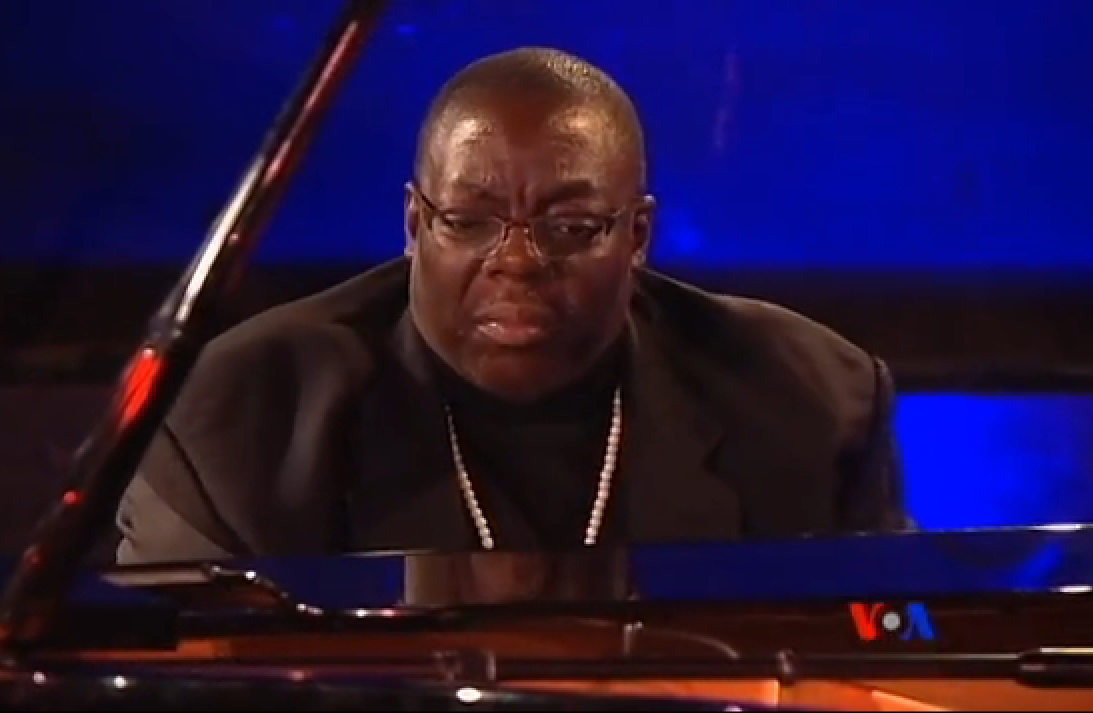
Ask a jazz pianist who can make a trio swing and pray at the same time, and Cyrus Chestnut's name comes up fast. He grew up playing hymns in a Baltimore Baptist church, and that gospel foundation never left his hands. Among the fifty players in jazz journalist Gene Rizzo's ranking of the greatest jazz pianists, Chestnut lands at number 29 — and Rizzo hears the church in him, praising a player who "makes a joyful noise in these secular times."
This profile covers who Cyrus Chestnut is, how a church pianist became one of the most in-demand accompanists of his generation, what defines his gospel-rooted touch, and the recordings — plus scores — to start with today.
The short answer: Cyrus Chestnut (b. 1963) is an American jazz pianist from Baltimore, Maryland, whose gospel-and-blues foundation, masterful dynamics, and "less is more" economy make him one of the most soulful mainstream players active today.
Life and career
The grandson of a minister, Chestnut began piano at seven with his father and played at Baltimore's Mt. Calvary Star Baptist Church as a boy. He studied at the Peabody Preparatory Institute and then at Berklee, where he won the Eubie Blake, Oscar Peterson, and Quincy Jones scholarships in successive years before graduating in 1985.
He built his reputation as a sideman — with George Adams, on tour with the vocalese master Jon Hendricks, and most visibly as singer Betty Carter's accompanist in the early 1990s. A stint in Wynton Marsalis's Lincoln Center Jazz Orchestra followed, and Chestnut has led his own trios and groups ever since. Writing in 2005, Rizzo called him "a very promising work-in-progress" still searching for a fully distinctive voice; two decades on, he is an established veteran who continues to record and tour, with new albums and concert dates through the mid-2020s.
Style and influence
Chestnut's signature is control. He shapes crescendos and decrescendos with unusual care, letting a phrase swell and recede rather than hammering it flat, and he trusts silence — the "less is more" principle he returns to again and again. Under everything sits a gospel-and-blues bedrock that gives even a bebop line a churchy roll.
His clearest model is Ahmad Jamal, whose use of space and dynamics Chestnut has absorbed so thoroughly that critics have called him Jamal's doppelganger; his solos also borrow from Bud Powell, Thelonious Monk, and McCoy Tyner. On the solo Christmas-carol session Blessed Quietness the gospel side is undisguised, while You Are My Sunshine shows the Jamal influence at full strength. Chestnut, a large and genial figure, even cut a Fats Waller-ish presence on screen in Robert Altman's film Kansas City.
Essential recordings
Chestnut's catalogue runs from solo hymn settings to swinging trio dates; these are strong entry points:
| Recording | Label / year | Why it matters |
|---|---|---|
| Blessed Quietness | Atlantic, 1996 | A solo album of Christmas carols and hymns — the purest distillation of his gospel roots |
| Revelation | Atlantic, 1994 | His major-label trio debut, the record that announced him as a leader rather than a sideman |
| You Are My Sunshine | Warner Bros., 2003 | Shows the Ahmad Jamal influence at full strength across standards and roots material |
| Cyrus Chestnut | Atlantic, 1998 | An expansive, guest-filled session that widened his palette beyond the piano trio |
Play Cyrus Chestnut's music
Because Chestnut is primarily an interpreter, the way into his world is through the tunes he transforms — the hymns and standards he reharmonizes with gospel warmth. Try "You Are My Sunshine" or a simple carol like "Blessed Quietness," then listen for how he shades the dynamics. A few of the pieces he's known for are open on MuseScore below.
Where Cyrus Chestnut ranks among jazz pianists
Rizzo places Chestnut at 29, the highest-ranked of the younger players he profiles. See the full list in our guide to the best jazz pianists of all time, and compare Chestnut with his chief model Ahmad Jamal and the bebop touchstones he draws on, Bud Powell and Thelonious Monk. To hear how his gospel-tinged harmony works, start with our guide to jazz chord progressions.
Frequently asked questions
Is Cyrus Chestnut still active?
Yes. As of 2026 Chestnut (born 1963) continues to record and tour, releasing new albums and playing club and concert dates. He remains one of the busiest mainstream jazz pianists working.
Who influenced Cyrus Chestnut's playing?
His deepest influence is Ahmad Jamal, whose command of space and dynamics Chestnut absorbed closely; he also draws on Bud Powell, Thelonious Monk, and McCoy Tyner, all over a constant gospel-and-blues foundation from his church upbringing.
What should I listen to first?
Start with Blessed Quietness (1996) for the solo gospel side, then Revelation (1994) to hear him lead a swinging trio. Together they capture both halves of his sound.
See scores on MuseScore
Rate this article
Be the first to rate this articleSee more

Virtual piano
Play a piano in your browser — use your mouse, touch, or computer keyboard. Real piano sound, and a free Pro tab with up to 61 keys, sustain, MIDI keyboard input, a metronome, and recording.

Keyboard ear trainer
Hear a note, then click the matching key on the on-screen piano — with instant feedback, the right key revealed on a miss, and a running score.

Metronome
Set the tempo and time signature and practice in steady time, or open the Pro tab for subdivisions, per-beat accents, a speed trainer, a gap trainer, click sounds, and recording yourself under the click — all free, right in your browser.

Scale finder
Pick a root note and a scale type — major, minor, the modes, pentatonic, blues — and see every note light up on the piano, spelled out for you.

Chord finder
Pick a root note and a chord type — major, minor, sevenths, suspended and more — and see the chord on the piano, named and spelled out for you.

Note finder
Pick a note and see every place it sits on the piano keyboard, named — and tap any key to hear it.