Tete Montoliu
·
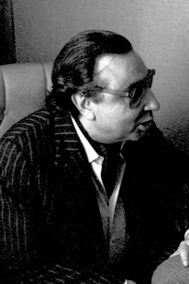
Jazz was an American art form, but some of its finest interpreters grew up an ocean away — and none more improbably than Tete Montoliu, a blind Catalan who built a bebop voice in Franco's Spain and became the pianist visiting American stars asked for by name. Montoliu ranks number 21 in jazz journalist Gene Rizzo's list of the greatest jazz pianists, the highest-placed European in the book and proof that the music's language could be spoken fluently far from its birthplace.
This profile covers who Tete Montoliu was, how a blind boy from Barcelona became Europe's premier jazz pianist, what made his blues-rich bebop so distinctive, and the recordings and scores to explore.
The short answer: Tete Montoliu (1933–1997) was a Spanish pianist, blind from birth, whose witty, blues-based bebop and phenomenal ear made him the accompanist of choice for touring Americans and one of the most respected soloists in European jazz.
Life and career
Montoliu was born in Barcelona in 1933, the son of a symphony oboist, and was blind from birth; he learned to read music in Braille at seven. Duke Ellington records and jam sessions with the tenor saxophonist Don Byas — who briefly lived with the family in 1943 — drew him to jazz, and he studied at the Barcelona Conservatory while chafing against Franco-era hostility to free expression. Spain's jazz scene was thin, and his early career was a struggle.
His reputation grew through work with visiting Americans: he recorded with Lionel Hampton in Madrid in 1956 and appeared at Cannes in 1958. Through the 1960s and '70s he became an A-list accompanist across Europe and Scandinavia, recording often in Denmark with the bassist Niels-Henning Ørsted Pedersen. A proud Catalan, he chose to remain in Barcelona rather than emigrate. He died there in 1997, of lung cancer; a planned duo with Hank Jones at the San Sebastián festival went unrealized.
Style and influence
Montoliu played standards through a high-grade bebop sensibility — fleet, witty and, as Rizzo notes, "the more blues-based" of the European pianists he is often compared with. His technique was formidable and his ear extraordinary; Rizzo praises him as a strong soloist and a "vacuum cleaner-eared accompanist" who missed nothing behind a horn.
What kept him fresh was a selective openness. He absorbed touches of Bill Evans, McCoy Tyner and Herbie Hancock without ever losing his bebop roots, and he was curious enough to play with avant-gardists like Archie Shepp and Anthony Braxton and to record a duet with Chick Corea. His example widened the sense of what a European jazz musician could be.
Essential recordings
Montoliu's catalogue is largely European; these entries show the soloist and the accompanist at their best:
| Recording | Label / year | Why it matters |
|---|---|---|
| A Tot Jazz | reissued Fresh Sound, 1965 | An early trio landmark that captured his Catalan bebop voice |
| Tête-à-Tête (with NHØP) | SteepleChase, 1976 | His celebrated Danish partnership with bassist Niels-Henning Ørsted Pedersen |
| Catalonian Fire | SteepleChase, 1974 | Fiery trio playing, including a definitive reading of "Body and Soul" |
| Lunch in L.A. | Contemporary, 1979 | A rare stateside session, with a piano duet alongside Chick Corea |
Play Tete Montoliu's music
Montoliu was an interpreter, so the way in is through the standards he made his own. Try the ballad "Body and Soul," Thelonious Monk's "'Round Midnight," or the evergreen "Autumn Leaves," and listen for the blues underneath his bebop lines. A few are open on MuseScore below in arrangements from approachable to advanced.
Where Tete Montoliu ranks among jazz pianists
Rizzo places Montoliu 21st, the top European in his ranking. See the full list in our guide to the best jazz pianists of all time, and compare him with two other blind masters of the keyboard, George Shearing and the virtuoso he sits beside on the list, Phineas Newborn Jr. To hear how bebop reharmonizes a standard, start with our guide to jazz chord progressions.
Frequently asked questions
Was Tete Montoliu blind?
Yes. Montoliu was blind from birth and learned to read music in Braille from the age of seven. He is one of three blind pianists in Rizzo's ranking, alongside George Shearing and Lennie Tristano.
Why is Tete Montoliu important?
He was the finest European jazz pianist of his generation — a superb bebop soloist and accompanist who worked with a stream of touring American stars and proved the music could be mastered far from the United States.
What should I listen to first?
Start with Tête-à-Tête (1976), his duo work with bassist Niels-Henning Ørsted Pedersen, then explore Catalonian Fire for his trio playing and his blues-rich take on standards like "Body and Soul."
See scores on MuseScore
Rate this article
Be the first to rate this articleSee more

Virtual piano
Play a piano in your browser — use your mouse, touch, or computer keyboard. Real piano sound, and a free Pro tab with up to 61 keys, sustain, MIDI keyboard input, a metronome, and recording.

Keyboard ear trainer
Hear a note, then click the matching key on the on-screen piano — with instant feedback, the right key revealed on a miss, and a running score.

Metronome
Set the tempo and time signature and practice in steady time, or open the Pro tab for subdivisions, per-beat accents, a speed trainer, a gap trainer, click sounds, and recording yourself under the click — all free, right in your browser.

Scale finder
Pick a root note and a scale type — major, minor, the modes, pentatonic, blues — and see every note light up on the piano, spelled out for you.

Chord finder
Pick a root note and a chord type — major, minor, sevenths, suspended and more — and see the chord on the piano, named and spelled out for you.

Note finder
Pick a note and see every place it sits on the piano keyboard, named — and tap any key to hear it.